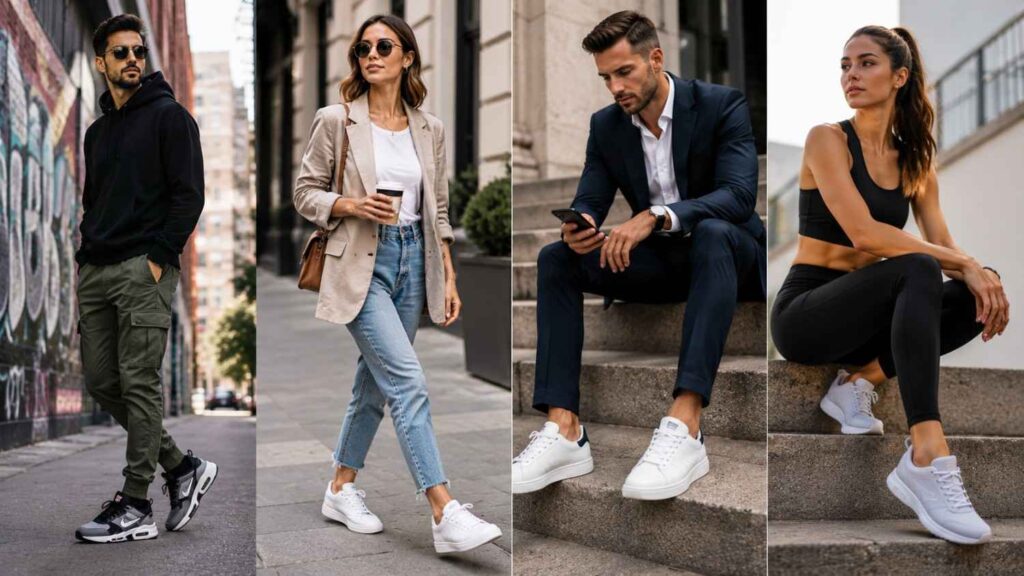
How to Style Sneakers for Any Occasion: A Complete Outfit Guide
Learning how to style sneakers for any occasion is less about following a fixed set of fashion rules and more about understanding balance. Sneakers can now be worn with far more than gym clothes. They work with denim, chinos, dresses, skirts, tailored trousers, blazers, and even certain suits. However, the fact that sneakers are versatile does not mean every sneaker works with every outfit.
The most successful combinations look intentional. The shoe’s shape should relate to the clothing silhouette, its material should suit the dress code, and its colour should connect with another part of the outfit. A clean leather court sneaker, for example, communicates something very different from a brightly coloured running shoe. Both can look stylish, but they belong in different settings.
In my experience, most unsuccessful sneaker outfits have one of three problems. The shoes are too athletic for the clothes, their visual weight is not balanced, or their condition makes the outfit look careless. Solving these issues does not require an expensive wardrobe. It simply requires choosing the right sneaker category and repeating a few reliable outfit formulas.
The following guide explains those formulas for everyday wear, professional settings, dresses, tailoring, travel, dates, parties, and other social occasions. It also covers colour coordination, proportions, socks, accessories, and cleaning so that your sneakers support the entire outfit rather than distracting from it.
Start With the Right Sneaker for the Dress Code
Before choosing trousers, a dress, or a jacket, consider where you are going and how formal the setting will be. The same white sneaker can appear polished at a creative office, appropriately relaxed at brunch, or too casual at a traditional black-tie event. Context controls the decision.
A useful approach is to place the occasion on a formality scale. Athletic activities sit at one end, followed by everyday casual situations, smart-casual environments, business-casual workplaces, semi-formal events, and traditional formal occasions. As formality increases, the ideal sneaker normally becomes cleaner, slimmer, simpler, and more refined.
Material also changes the impression. Mesh and engineered knit communicate performance, while smooth leather and fine suede feel closer to traditional footwear. Canvas sits comfortably in casual wardrobes, and platform or chunky designs create a more fashion-focused appearance.
| Occasion | Recommended Sneaker | Outfit Direction | Styles to Use Carefully |
|---|---|---|---|
| Errands and weekends | Canvas, retro, athletic, slip-on | Denim, shorts, relaxed trousers, casual dresses | Very delicate suede in poor weather |
| Travel and sightseeing | Supportive lifestyle or walking sneaker | Stretch trousers, layers, practical outerwear | Unbroken-in shoes |
| Business casual | Minimal leather or suede low-tops | Tailored trousers, blazers, midi dresses | Bright performance runners |
| Date night | Clean leather, suede, platform, statement sneaker | Dark denim, dress, skirt, relaxed tailoring | Dirty or heavily worn shoes |
| Creative formal event | Refined low-top sneaker | Unstructured suit, jumpsuit, modern dress | Bulky gym shoes |
| Traditional formal event | Usually dress shoes | Follow the stated dress code | Most sneaker categories |
Choose a Silhouette and Material That Match the Setting
The silhouette is the first feature people notice, even when they cannot name the sneaker style. Low-profile court sneakers have a neat shape and limited visual bulk, which makes them easy to combine with tailored trousers, straight-leg jeans, midi dresses, and casual suits. They are often the safest choice when you want comfort without making the footwear the centre of attention.
Retro runners have more panels, texture, and movement. They work especially well with denim, cargo trousers, relaxed tailoring, sweatshirts, and casual outerwear. Chunky sneakers create even more visual weight. To style them properly, use wider trousers, longer coats, oversized shirts, or dresses with enough volume to balance the shoe.
Material should reinforce the same message. Smooth leather looks controlled and polished. Suede adds softness and depth, although it requires more care around rain and dirt. Canvas creates a relaxed, warm-weather feeling, while mesh and knit strongly suggest sport or performance.
Clarks similarly distinguishes between classic white, athletic, platform, suede, high-top, and statement sneakers when recommending shoes for different dress shapes and occasions.
| Sneaker Material | Best For | Style Level | Key Benefit | Avoid For |
|---|---|---|---|---|
| Leather | Business casual, dinners, smart events | High | Polished and easy to dress up | Intense workouts |
| Suede | Dates, smart-casual outings | High | Premium texture and refined appearance | Wet weather without protection |
| Canvas | Casual weekends, summer outfits | Medium | Lightweight and breathable | Formal occasions |
| Mesh | Travel, walking, athletic looks | Low | Maximum comfort and ventilation | Professional workplaces |
| Knit | Everyday casual wear | Medium | Flexible and comfortable fit | Dressy events |
Match Sneaker Colour and Condition to the Level of Formality
Neutral sneakers are valuable because they reduce visual conflict. White and cream brighten an outfit, black creates a stronger base, grey blends easily with cool colours, and brown or beige works naturally with earth tones. Navy can also function as a neutral when your wardrobe contains denim, blue tailoring, or muted casualwear.
For a simple outfit, you can use the sneaker as an accent. Burgundy shoes may connect with a belt, bag, print, or knitwear detail. Green sneakers can add interest to beige, navy, or white clothing. When the shoe already contains several colours, keep the rest of the outfit controlled so that the overall appearance does not become visually noisy.
Condition becomes increasingly important as the occasion grows more formal. A slightly worn canvas shoe may look natural with distressed denim, but the same marks can make tailored trousers appear careless. Check the uppers, edges, soles, laces, and toe area before wearing sneakers to work or an evening event.
This does not mean every pair must look brand-new. The condition simply needs to feel compatible with the outfit. Intentional wear can support a rugged casual look, while refined outfits require cleaner surfaces and more orderly details.
How to Style Sneakers for Casual and Everyday Outfits
Casual dressing offers the most freedom, but freedom should not be confused with randomness. A good everyday outfit still needs a clear shape, colour story, and focal point. The advantage of sneakers is that they can make simple wardrobe basics feel current without making the wearer appear overdressed.
Begin with one strong foundation. This may be straight-leg jeans, chinos, cargo trousers, denim shorts, or a casual skirt. Add a well-fitting top, then use an outer layer or accessory to give the outfit structure. The sneaker should either blend into this combination or provide one controlled point of contrast.
For beginners, I recommend building three reusable casual formulas: neutral sneakers with denim and a T-shirt, retro sneakers with relaxed trousers and an overshirt, and high-tops with cropped bottoms. Once these combinations feel natural, you can introduce brighter colours, statement soles, patterned socks, or more unusual proportions.
Casual outfits also provide an opportunity to mix high and low elements. A blazer can sharpen a T-shirt and jeans, while sneakers prevent the blazer from feeling too formal. A silk skirt can feel more wearable with a simple trainer, and tailored trousers can become weekend-friendly when combined with a sweatshirt and retro shoe.
Wear Sneakers With Jeans, Chinos, Shorts, and Casual Trousers
Jeans and sneakers are a dependable combination because both belong naturally in casual wardrobes. The important detail is the relationship between the trouser opening and the shoe. Straight-leg jeans work with almost every sneaker category. Slim jeans normally look better with low-profile shoes, while wide-leg denim can support platforms, retro runners, and chunkier soles.
Avoid allowing excess fabric to collapse untidily over a slim sneaker. A clean break, slight crop, or controlled cuff keeps the shape visible. With high-tops, cropped jeans or a small cuff prevents the trouser from competing with the ankle section of the shoe. Wide trousers can cover part of the sneaker, but the hem should not drag along the ground.
Chinos create a slightly smarter result. Pair beige, olive, navy, or charcoal chinos with white, cream, brown, or grey sneakers. Add a polo shirt, knitted top, Oxford shirt, or casual blazer depending on the setting.
Shorts expose more of the leg and shoe, so sock choice becomes important. No-show socks create a minimal look, while crew socks make the outfit sportier. Match the sock style to the rest of the clothing rather than treating it as an afterthought.
Use Layers to Make Casual Sneaker Outfits Look Intentional
Layering is one of the easiest ways to turn basic clothing into a complete outfit. A T-shirt, jeans, and sneakers may look unfinished on their own, but an overshirt, cardigan, denim jacket, bomber, or casual blazer adds shape and visual depth. The additional layer also allows you to repeat the sneaker’s colour somewhere above the waist.
For example, white sneakers can connect with a white T-shirt under a navy overshirt. Brown suede sneakers may relate to a tan jacket or leather watch strap. A coloured retro trainer can pick up a small tone from a checked shirt, cap, scarf, or bag. This repetition makes the colour choice feel deliberate without creating an overly coordinated appearance.
Pay attention to volume. Chunky sneakers usually need an outfit with enough visual substance, such as relaxed trousers and a heavier jacket. A slim leather sneaker works more naturally with a fine-knit cardigan, fitted coat, or clean overshirt.
One thing I always check is whether the outfit has a clear hierarchy. If the sneakers are bold, keep the layers relatively simple. When the clothing contains prints, strong textures, or several colours, choose a quieter shoe. The viewer should be able to understand the outfit without deciding where to look first.
How to Wear Sneakers to Work and Smart-Casual Events
Sneakers can work in many professional environments, but workplace rules should always come before personal preference. A creative agency, technology company, or relaxed hybrid office may welcome modern trainers, while a legal, financial, hospitality, or client-facing environment may follow stricter expectations. Check written policies and observe how senior colleagues dress before building an office sneaker rotation.
In more polished environments, streamlined and minimalist shoes are generally easier to integrate than technical running shoes. Glamour recommends sleek sneaker styles for dressier workplaces and suggests combining them with professional pieces such as blazers, dresses, and suits. It also advises checking official workplace footwear rules.
The clothing should carry most of the professional message. Tailored trousers, structured knitwear, collared shirts, midi dresses, long skirts, and well-cut jackets help balance the casual nature of the footwear. A deliberate bag, belt, watch, or piece of jewellery can add further refinement.
Avoid relying on the sneaker alone to create comfort. Fit, fabric, and proportions matter throughout the outfit. Stretch-wool trousers, unstructured blazers, soft shirts, and breathable dresses can produce a professional appearance without feeling restrictive.
Build Office Outfits With Trousers, Skirts, and Dresses
Tailored trousers provide one of the easiest foundations for sneakers at work. Choose a straight, gently tapered, or wide-leg shape with a controlled hem. Combine the trousers with a tucked shirt, fine knit, structured blouse, or neat polo. A matching belt and organised bag help maintain a professional finish.
For women, midi skirts and dresses offer a similarly practical formula. A shirt dress with clean sneakers can look polished because the collar, waist definition, and longer hem provide structure. A simple midi dress can be layered with a cardigan or blazer for meetings. Glamour specifically highlights midi dresses and shirt dresses as useful foundations for workplace sneaker outfits.
The shoe should be visually quiet. White is versatile, but cream, taupe, navy, grey, brown, and black may blend more naturally with a professional wardrobe. Leather and fine suede usually look more refined than mesh, especially when branding is limited.
Consider the view from every angle. Office trousers that look neat from the front may gather excessively around the heel. Dresses may also fall at an awkward point in relation to the sneaker. Check the full outfit in a mirror and walk around before deciding that the proportions work.
Pair Sneakers With Blazers, Sports Coats, and Relaxed Suits
A blazer immediately gives sneakers more structure. For a reliable smart-casual formula, combine a navy or grey blazer with a plain T-shirt, tailored trousers, and minimalist sneakers. The T-shirt keeps the outfit relaxed, while the blazer and trousers communicate intention. A knitted polo or open-collar shirt can make the combination slightly more formal.
Sneakers can also work with a suit when the dress code allows relaxed tailoring. Esquire notes that not every sneaker suits tailored clothing and recommends approaching the combination strategically. It identifies a clean white sneaker as an accessible starting point, while chunkier shoes require looser and more fashion-forward tailoring.
The suit itself should not feel highly ceremonial. Unstructured navy, grey, beige, olive, or linen tailoring is more compatible than a strict business suit worn with a formal shirt and tie. Keep the trouser hem clean so the sneaker remains visible without creating excess fabric around the ankle.
For the most refined result, use a low-top leather sneaker with minimal branding. Modern suit-and-sneaker styling also depends strongly on precise trouser length, controlled proportions, clean shoe surfaces, and thoughtful sock choices.
How to Style Sneakers With Dresses, Skirts, and Tailoring
Pairing sneakers with dresses or skirts works because it combines two different style messages. The dress may appear romantic, formal, minimal, or structured, while the sneaker introduces movement and ease. When those messages are balanced, the outfit feels modern rather than mismatched.
The first decision is whether you want harmony or contrast. A simple shirt dress with a white leather sneaker creates harmony because both pieces are clean and practical. A satin midi dress with a retro trainer creates more contrast. Either method can work, but the contrast must appear intentional.
Clarks recommends classic white sneakers for broad versatility, athletic shoes for casual dresses, platforms with maxi lengths, and chunkier styles with flowing midi dresses. It also advises balancing the silhouette and allowing either the dress or the sneaker—rather than both—to act as the main statement.
Tailoring follows similar principles. A fitted garment normally suits a cleaner shoe, while an oversized or flowing garment can support more volume at the foot. Colour repetition, suitable socks, and controlled accessories help connect the separate elements.
Match the Sneaker Shape to the Dress or Skirt Hemline
Hemline and sneaker height affect the visible proportions of the leg. Low-top shoes expose the ankle and therefore work easily with midi dresses, knee-length skirts, shirt dresses, and long flowing styles. They create a lighter visual finish and are often the safest choice when the dress already contains volume or detail.
High-tops cover more of the ankle. They can look strong with mini dresses, A-line skirts, denim skirts, or shorter casual designs because there is enough visible leg to separate the shoe from the hem. With longer dresses, high-tops may shorten the visual line unless the colours are kept similar or the dress includes a slit.
Platform and chunky sneakers add weight and height. They can balance tiered midis, relaxed maxi dresses, and oversized silhouettes, but they may overpower a very narrow or delicate dress. Conversely, slim court sneakers help tailored and body-skimming dresses remain streamlined.
Consider movement as well as appearance. A dress may hang differently when walking, and a long hem can catch against a thick sole. Try the complete outfit before the occasion rather than assuming that two individually attractive pieces will function well together.
| Sneaker Style | Best Clothing Match | Creates This Look | Styling Tip |
|---|---|---|---|
| Minimal Low-Top | Slim jeans, chinos, tailored trousers | Clean and modern | Ideal for smart-casual outfits |
| Chunky Sneakers | Wide-leg trousers, oversized shirts | Trendy and relaxed | Keep the rest of the outfit simple |
| High-Top Sneakers | Cropped jeans, shorts, casual dresses | Streetwear-inspired | Show some ankle for better proportions |
| Retro Runners | Straight jeans, relaxed trousers | Classic everyday style | Pair with neutral colors for versatility |
| White Sneakers | Dresses, denim, tailored separates | Fresh and timeless | Keep them clean for a polished appearance |
Balance Feminine, Casual, and Structured Clothing Elements
A useful sneaker-and-dress outfit usually contains a visual bridge between the footwear and clothing. A denim jacket can connect casual shoes with a floral dress. A structured handbag can make white sneakers feel more polished. A blazer can support a slip dress and low-profile trainer by adding tailored lines above the waist.
Texture is another effective bridge. Leather sneakers can relate to a leather belt or bag, while canvas shoes work naturally with cotton, linen, denim, and casual jersey. Suede footwear can soften wool skirts, knitted dresses, and autumn layers. The materials do not need to match exactly; they simply need to belong to a similar level of refinement.
Accessories determine whether the result feels daytime, professional, or evening-ready. A crossbody bag and cap create a casual direction. A structured top-handle bag, watch, and simple jewellery make the same sneaker outfit feel more elevated.
Avoid making every item compete for attention. When the dress has a bold print, embellishment, dramatic sleeve, or unusual shape, choose a quiet sneaker. When the outfit is built from simple neutral clothing, a colourful or patterned shoe can provide personality without overwhelming the look.
How to Wear Sneakers for Dates, Parties, and Special Occasions
Social occasions often require a more thoughtful approach because the difference between relaxed and underdressed can be small. Start by considering the venue, time of day, invitation wording, expected activities, and the preferences of the host. A gallery opening, outdoor celebration, casual restaurant, rooftop gathering, or creative wedding may allow refined sneakers. A traditional ceremony, formal corporate event, or black-tie occasion may not.
To dress up sneakers, reduce athletic details and increase refinement elsewhere. Choose smooth leather, fine suede, controlled colour, limited branding, and a relatively slim profile. Then support the shoe with stronger clothing: dark denim, tailored trousers, a blazer, a polished dress, a coordinated set, or an elegant jumpsuit.
Condition matters more at night because lighting can highlight scuffed toes, stained laces, and worn edges. Clean the shoes in advance rather than immediately before leaving, especially when the material needs time to dry.
The aim is not to disguise the sneakers as formal shoes. It is to build a modern outfit in which their relaxed character feels appropriate. When the dress code remains unclear, it is safer to choose more traditional footwear or ask the host.
Create Elevated Date-Night and Evening Outfit Formulas
For a casual dinner, combine clean sneakers with dark straight-leg jeans, a fitted knit, and a structured jacket. The dark denim adds polish, while the sneaker keeps the outfit relaxed enough for walking or moving between venues. A leather belt, watch, or small bag can repeat the shoe material and create cohesion.
For a more fashionable evening, women can pair a satin or knitted midi dress with slim leather sneakers and minimal jewellery. Men can combine tailored trousers, a knitted polo, and a suede or leather low-top. A monochromatic palette—such as black, charcoal, and grey—can make the outfit feel more intentional even when the footwear is casual.
Statement sneakers may also work when the clothing is simple. A colourful shoe can lift a black dress, dark denim outfit, or neutral suit. Keep competing accessories limited so the footwear appears purposeful rather than accidental.
Comfort should support confidence, but do not wear an unfamiliar pair simply because it looks appropriate. Test the fit beforehand. Blisters, slipping heels, or painful pressure points will affect how you move and enjoy the occasion, regardless of how well the outfit photographs.
Know When Sneakers Are Not Appropriate
Sneakers are not automatically suitable simply because they are expensive, fashionable, or clean. Traditional black-tie events normally call for formal shoes unless the invitation or host clearly encourages creative dress. Conservative ceremonies, certain religious settings, luxury venues, formal interviews, and workplaces with explicit uniform standards may also require different footwear.
Read the exact wording of the dress code. “Casual,” “smart casual,” “business casual,” “cocktail,” “semi-formal,” and “black tie” are not interchangeable. Sneakers are easiest to justify in casual and smart-casual environments. They may work in selected business-casual or creative semi-formal situations, but the margin for error becomes smaller.
The condition and style of the shoe cannot override an explicit rule. A minimalist leather sneaker is still a sneaker. When professional reputation, cultural expectations, safety requirements, or respect for the host is involved, following the stated standard matters more than creating a fashion-forward contrast.
Keep an alternative available when necessary. Travellers and commuters can wear supportive sneakers during the journey and change into formal footwear upon arrival. This practical solution preserves comfort without ignoring the expectations of the event.
How to Choose Sneakers for Travel and Long Days
Travel outfits need to balance appearance, comfort, weather, luggage space, and repeated wear. A shoe that looks excellent for one dinner may not remain comfortable during a full day of airports, public transport, museums, and walking. For this reason, versatility should come before novelty.
Select a pair that has already been worn enough to confirm the fit. Check heel movement, toe space, arch comfort, and whether the upper creates pressure after several hours. A sneaker that feels acceptable for ten minutes in a shop may behave differently after a long day.
The design should also coordinate with most of the clothing in your suitcase. Neutral low-tops, understated retro trainers, and simple walking sneakers are often easier to repeat than highly distinctive colours. However, your itinerary should determine the final choice. An active trip may require a supportive technical shoe, while an urban weekend may allow a refined leather sneaker.
Weather and maintenance matter as well. White canvas can be difficult in rain, while delicate suede may not suit muddy routes. Consider packing a second lightweight option when the trip includes both active days and smarter evening plans.
Prioritise Fit, Support, and Practical Versatility
A travel sneaker must perform several jobs. It should remain comfortable over extended periods, work with different outfits, handle the expected surfaces, and recover between wears. This does not mean choosing the bulkiest athletic shoe available. Many lifestyle sneakers provide cushioning and support while maintaining a relatively clean appearance.
Fit is personal, so avoid treating a fashionable recommendation as a guarantee. Try shoes with the socks you plan to wear and test them later in the day, when feet may feel slightly fuller. Walk on different surfaces where possible and pay attention to heel stability, toe pressure, and flex.
Consider the activities rather than the destination alone. A city holiday may involve more walking than an outdoor resort. Cobblestones, stairs, airport queues, and long transfers place different demands on footwear than short journeys between a hotel and restaurant.
I recommend taking at least one pair that works with your most casual and moderately polished clothing. A neutral sneaker can pair with stretch trousers during transit, denim for sightseeing, and a casual dress or chinos for dinner. This reduces luggage while preserving enough flexibility for schedule changes.
Build a Compact Travel Sneaker Wardrobe
For a short trip, one versatile sneaker may be enough. Choose a neutral colour, moderate sole, supportive construction, and material suited to the weather. Build outfits around that pair before packing. Photograph each combination so that you do not carry unnecessary clothing.
For longer or more varied travel, a two-pair system works well. The first pair should handle walking, transportation, and active days. The second can be slimmer and more polished for restaurants, events, or professional meetings. Wear the heavier pair during transit and pack the lighter option.
Use colour repetition to increase outfit compatibility. White or cream shoes can connect with light tops and accessories. Black sneakers work with dark outerwear and evening outfits. Grey, navy, taupe, and muted green can bridge both warm and cool colours when selected carefully.
Allow shoes to air between wears and avoid packing them while damp. Use a shoe bag to separate soles from clothing, and place socks or soft items inside the shoes to preserve space and shape. A small cloth and material-appropriate cleaning product can help you address marks before they become difficult to remove.
How to Keep Sneaker Outfits Looking Polished
Even a well-planned outfit can lose its impact when the footwear appears neglected. Sneakers naturally collect dust, dirt, moisture, and creases, but regular light maintenance is usually more effective than waiting until they need aggressive cleaning.
Start by identifying the material. Leather, suede, canvas, mesh, knit, rubber, and mixed-material shoes should not automatically receive the same treatment. Review the manufacturer’s care instructions whenever possible, particularly for coated finishes, delicate dyes, glued decorations, or specialised performance materials.
Nike advises hand-cleaning sneakers with a mild solution and allowing them to air-dry rather than placing them in a washing machine or dryer. It also notes that leather and suede need extra care. Adidas presents a process that separates preparation, outsole cleaning, upper cleaning, lace washing, and air-drying, with softer brushes used on the upper.
Maintenance is not limited to washing. Laces, socks, insoles, odour, storage, and rotation all influence how the sneaker looks and feels. Small improvements in these areas can make everyday outfits appear significantly more considered.
Clean Sneakers According to Their Material
Begin by removing loose dirt with a dry or lightly dampened brush. Take out the laces so that you can reach the tongue and eyelet areas. Clean the outsole separately because its rubber surface can normally tolerate a firmer brush than the upper.
For smooth leather, use a soft cloth or brush with a mild material-appropriate cleaner. Avoid soaking the shoe, and condition the leather when recommended by the manufacturer. Canvas and many synthetic textiles can often be hand-cleaned with mild soap and water, but colourfastness should be tested on a hidden area first.
Suede requires a more cautious method because moisture can alter its texture and appearance. Use a dedicated suede brush and follow product-specific instructions. Mesh and knit uppers should be handled gently to avoid damaging fibres or changing the shape.
Nike does not recommend machine-washing its shoes and advises mild hand-cleaning followed by air-drying. It also warns that dryer heat can damage footwear. Regardless of brand, always check the care label because construction methods and materials vary between models.
Use Socks, Laces, and Accessories to Finish the Outfit
Socks affect both comfort and visual proportion. No-show socks create a clean ankle line with low-top sneakers, cropped trousers, skirts, and dresses. Crew socks produce a sportier or more intentional streetwear look. When socks are visible in professional outfits, plain colours connected to the trousers or shoes usually look more refined than heavily branded athletic designs.
Laces deserve similar attention. Frayed, stained, or unevenly tied laces can make otherwise clean sneakers appear neglected. Replacing them is an inexpensive way to refresh the shoe. Matching laces create a minimal result, while contrasting colours can introduce personality into a casual outfit.
Accessories should connect the sneaker to the clothing without creating a forced match. A leather sneaker can relate to a belt, watch strap, or bag. A coloured trainer may repeat a small tone from a scarf, shirt, or cap. Metallic details on the shoe can also be supported with restrained jewellery.
Finally, consider posture and confidence. Sneakers often create a more relaxed stance, but the rest of the presentation should remain intentional. Neat grooming, suitable outerwear, and a properly fitted outfit help the footwear feel like a deliberate style decision rather than a last-minute substitution.
Quick Answer About How to Style Sneakers for Any Occasion
The easiest way to style sneakers successfully is to match their shape, material, colour, and condition to the formality of the occasion. Clean, low-profile leather sneakers work well with tailored trousers, dresses, blazers, and relaxed suits. Canvas shoes and retro trainers suit casual outfits, while technical running shoes are better reserved for athletic, travel, or intentionally sporty looks.
Start with the dress code rather than the sneaker. A casual weekend allows more colour, texture, and visual weight. A workplace or dinner setting usually calls for a cleaner silhouette, fewer logos, and a coordinated colour palette. Your clothes should also balance the shoe’s proportions. Slim sneakers pair naturally with neat tailoring, while chunky sneakers need wider trousers, relaxed denim, or clothing with enough volume to support their heavier appearance.
Finally, check the details. Fresh laces, suitable socks, clean soles, and thoughtful accessories can make an affordable pair appear polished. The goal is not to force sneakers into every dress code. It is to recognise when they support the outfit’s mood and when traditional footwear would be more appropriate.
Frequently Asked Questions
The following answers address common questions people ask when deciding how to wear sneakers with casual, professional, and dressier clothing. The most important principle is context. A sneaker that works in one environment may feel unsuitable in another because the dress code, clothing proportions, material, and condition have changed.
What Outfits Look Best With Sneakers?
Sneakers work especially well with jeans, chinos, tailored trousers, shorts, casual suits, midi dresses, shirt dresses, skirts, jumpsuits, and coordinated sets. The best outfit depends on the sneaker’s shape. Slim shoes complement neat clothing, while chunky or platform styles need wider trousers, oversized layers, or flowing dresses to balance their visual weight.
What Colour Sneakers Go With the Most Outfits?
White, cream, black, grey, navy, taupe, and muted brown are among the most versatile choices. White and cream brighten clothing, while darker neutrals create a grounded appearance and hide minor marks more easily. Choose the neutral that connects naturally with your existing trousers, outerwear, bags, and belts rather than selecting a colour in isolation.
Can I Wear Sneakers With a Dress?
Yes. Low-top white or neutral sneakers work with shirt dresses, casual midis, knitted dresses, and many maxi styles. Platforms can balance longer hemlines, while high-tops often suit shorter casual dresses. Keep the proportions controlled and allow either the dress or the footwear to act as the main statement.
How Do I Make Sneakers Look More Formal?
Choose smooth leather or fine suede, limited branding, a slim shape, and a neutral colour. Wear the shoes with tailored clothing, a structured bag, restrained accessories, and clean socks or no-show socks. The sneakers should also be well maintained. Even refined footwear will look casual and careless when the laces, soles, and uppers are visibly dirty.
Can Sneakers Be Worn With a Suit?
Sneakers can work with relaxed suits in creative workplaces, modern social events, and selected smart-casual settings. Choose clean, low-profile leather shoes and ensure the suit is well fitted. Avoid combining athletic running shoes with highly formal business tailoring. The dress code should permit the contrast before you use this outfit formula.
What Sneakers Are Appropriate for Work?
Minimal leather or suede sneakers in white, cream, brown, navy, grey, or black are usually the easiest to style professionally. Wear them with tailored trousers, midi dresses, skirts, collared shirts, fine knitwear, and blazers. Always check workplace policies because some offices, industries, meetings, and safety environments do not permit sneakers.
How Can I Style Chunky Sneakers Without Looking Bulky?
Balance the shoe with clothing that has enough volume. Straight or wide-leg trousers, relaxed denim, oversized shirts, long coats, and flowing midi dresses can support a thicker sole. Avoid combining a very chunky shoe with trousers that are extremely narrow unless you intentionally want a dramatic contrast. Keep the colour palette controlled to reduce visual heaviness.
How Should I Clean Sneakers Without Damaging Them?
Check the manufacturer’s care instructions first. Remove loose dirt, clean the outsole and upper separately, use a soft brush on delicate areas, and allow the shoes to air-dry. Nike advises against machine-washing and tumble-drying its footwear, while adidas recommends a staged hand-cleaning process for the outsole, upper, and laces.
Conclusion
Understanding how to style sneakers for any occasion begins with choosing the right shoe for the environment. Casual settings allow canvas, colourful, retro, chunky, and athletic designs. Professional and smart-casual situations normally benefit from cleaner leather or suede silhouettes, limited branding, and neutral colours. Dresses, skirts, and tailoring can all work with sneakers when the footwear’s proportions support the clothing.
The strongest outfits also connect their details. A repeated colour, coordinated material, suitable sock, clean lace, or structured accessory can make the footwear feel fully integrated. You do not need to match every element exactly. The goal is to create enough visual connection that the outfit appears planned.
Remember that context remains more important than fashion trends. Workplace policies, event instructions, cultural expectations, weather, safety, and comfort should guide the final decision. Sneakers are versatile, but they are not compulsory for every dress code.
Begin with a small rotation rather than buying many similar pairs. A neutral low-top, a comfortable everyday trainer, and an optional statement sneaker can cover most wardrobes. Keep them clean, test outfit proportions in advance, and use the occasion to determine how casual or refined the final combination should feel.