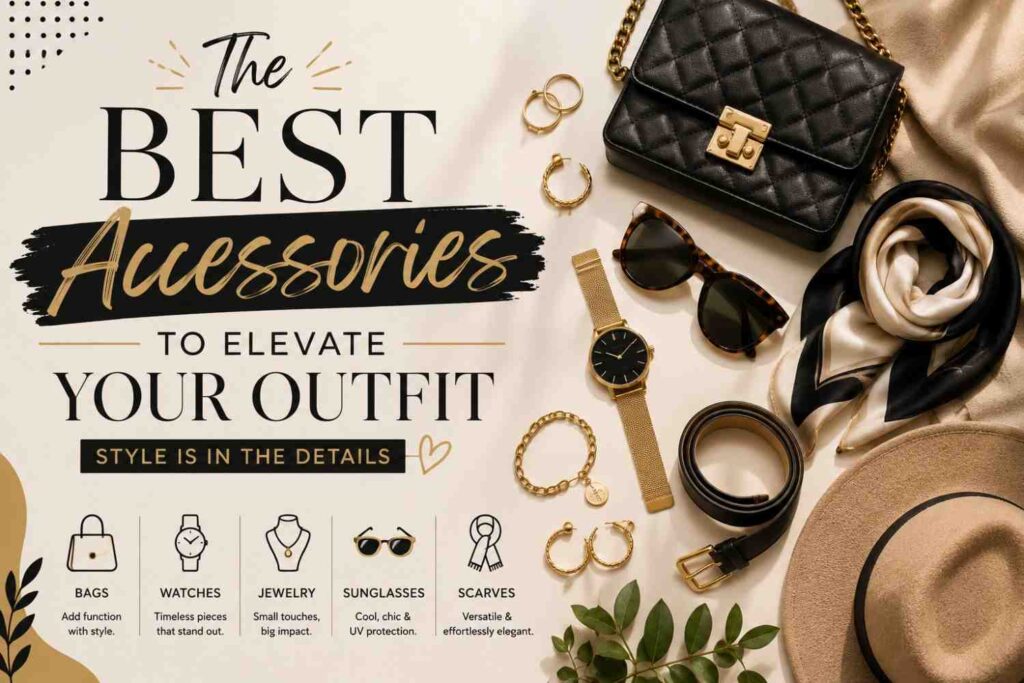
The Best Accessories to Elevate Your Outfit
The Best Accessories to Elevate Your Outfit are not always the most expensive pieces in your wardrobe. In many cases, they are the small, thoughtful details that make your clothes look complete. A plain white shirt, straight-leg jeans, and simple loafers can look perfectly fine on their own. But when you add a leather belt, clean gold hoops, a structured handbag, and well-fitted sunglasses, the outfit suddenly feels styled, confident, and polished.
Accessories help bridge the gap between wearing clothes and creating a look. They allow you to show personality without changing your entire wardrobe. If your closet is mostly neutral, accessories can add color and texture. If your clothing is already bold, accessories can create balance and refinement. This is why fashion accessories are useful for beginners as well as people who already understand personal style.
The key is not to wear every accessory you own at once. A strong outfit usually depends on smart editing. One standout bag, one beautiful necklace, or one polished pair of shoes can say more than five competing pieces. When chosen carefully, outfit accessories help you look more intentional, more confident, and more appropriate for the occasion.
This guide explains how to choose jewelry, bags, belts, scarves, sunglasses, watches, shoes, and capsule wardrobe accessories in a practical way. You will also learn how to accessorize an outfit step by step, how to make simple outfits look more expensive, and how to build an accessory collection that works across many different looks.
Why Accessories Matter in Personal Style
Accessories matter because they shape the final impression of an outfit. Clothing creates the base, but accessories create the finish. A blazer and trousers may already look professional, but the right watch, belt, handbag, and shoes can make the outfit look sharper and more complete. A simple dress may feel plain at first, but a scarf, earrings, and structured bag can make it suitable for lunch, work, travel, or dinner.
Good accessories also help you communicate your personal style. A person who loves classic fashion may choose pearls, leather bags, slim belts, and neutral scarves. Someone with a creative style may prefer sculptural earrings, colorful sunglasses, printed scarves, and bold shoes. Neither approach is better. What matters is whether the accessories feel intentional and connected to the overall look.
Another reason accessories are important is that they make your wardrobe more flexible. Instead of buying new clothes for every occasion, you can use accessories to change the mood of pieces you already own. This is especially helpful for capsule wardrobes, budget-conscious shopping, and sustainable styling. The Best Accessories to Elevate Your Outfit should not only look good; they should also help you get more use from your clothing.
When accessories are chosen well, they add proportion, color, contrast, texture, and polish. When chosen poorly, they can make an outfit feel busy or disconnected. The goal is to understand what each accessory does, then use it with purpose.
Accessories Add Personality Without Replacing Your Wardrobe
One of the greatest strengths of accessories is that they allow you to refresh your wardrobe without replacing your clothes. Many people think they need new outfits when, in reality, their existing clothing simply needs stronger styling. A black dress, for example, can look elegant with pearl earrings and a satin clutch, modern with a metallic cuff and pointed shoes, relaxed with a woven tote and flat sandals, or bold with red lipstick and statement earrings.
This flexibility makes accessories especially valuable for people who want to dress well without constantly shopping. You can repeat the same blazer, jeans, dress, or shirt many times, but change the accessories to create a different impression. A silk scarf, leather belt, structured handbag, or pair of sunglasses can shift the entire mood of a look.
In my experience, accessories are also where personal style becomes easier to express. Clothes may be practical, neutral, or limited by dress codes, but accessories give you room to add individuality. A watch, necklace, brooch, scarf, bag charm, or hair clip can show taste and personality in a subtle but effective way. That is why The Best Accessories to Elevate Your Outfit should feel like an extension of you, not just an afterthought.
Accessories Help Balance Color, Shape, and Proportion
Accessories do more than decorate an outfit. They help control balance, shape, and visual direction. A belt can define the waist when a dress, oversized shirt, or blazer feels too loose. Long earrings can make the neck appear more open and elegant. A structured handbag can add sharpness to soft fabrics, while a rounded bag can soften a very tailored outfit.
Color balance is another important part of accessorizing. If an outfit feels too plain, a colored scarf, bright bag, or interesting pair of shoes can add energy. If an outfit already includes a strong print or bold color, neutral accessories can calm the look and make it feel more refined. This is where many beginners struggle. They either add too much or avoid accessories completely.
Proportion is equally important. Large accessories work well with simple clothing, while delicate accessories suit detailed or formal pieces. For example, statement earrings look beautiful with a plain neckline, but they may compete with a heavily embroidered top. A wide belt can add structure to a coat or dress, while a thin belt may work better with lightweight fabrics.
One thing I always check first is whether the accessory improves the outfit’s shape or simply adds noise. If it brings balance, keep it. If it distracts from the outfit, remove it.
Jewelry That Instantly Lifts an Outfit
Jewelry is one of the easiest and most effective ways to make an outfit look finished. It sits close to the face, hands, and neckline, which means it naturally draws attention. Even small jewelry pieces can make a major difference. A pair of clean hoops can brighten a plain T-shirt. A fine chain can soften a button-down shirt. A cuff bracelet can make a sleeveless dress feel more styled.
The best jewelry for outfits depends on the clothing, the occasion, and your personal comfort level. Some people feel most confident in minimalist jewelry, such as studs, fine rings, and slim necklaces. Others prefer statement jewelry, such as bold earrings, layered chains, oversized rings, or sculptural cuffs. Both approaches can work when the jewelry supports the outfit rather than fighting against it.
Jewelry also helps create visual rhythm. Repeated metal tones, similar shapes, or balanced shine can make an outfit look cohesive. For example, gold earrings, a gold watch, and gold bag hardware create warmth and connection. Silver jewelry with black leather accessories can feel sharper and more modern. Mixed metals can also work, but they should look intentional rather than accidental.
When choosing jewelry, think about neckline, sleeve length, hairstyle, and setting. If your neckline is high, earrings may matter more than a necklace. If your sleeves are short, bracelets or a watch can add interest. If your outfit is formal, refined jewelry usually works better than overly casual pieces. The Best Accessories to Elevate Your Outfit often begin with jewelry because it is visible, expressive, and easy to adapt.
Minimalist Jewelry for Everyday Polish
Minimalist jewelry is ideal for everyday outfits because it adds polish without overwhelming the look. Pieces such as small hoops, simple studs, fine chains, delicate bracelets, slim rings, and subtle pendants work well with workwear, casual clothing, travel outfits, and smart-casual looks. They are easy to wear, easy to repeat, and rarely feel out of place.
The beauty of minimalist jewelry is that it supports the outfit quietly. It does not demand attention, but it makes everything look more considered. A white shirt looks cleaner with small gold hoops. A black turtleneck feels more elegant with a fine silver chain. A simple dress can look more refined with a slim bracelet and small earrings.
For beginners, I recommend starting with a small set of everyday jewelry in one main metal tone. This could include earrings, one necklace, one bracelet, and one ring. Choosing one metal tone at first makes styling easier because your pieces naturally coordinate. Gold often adds warmth, silver feels crisp, and rose gold can feel soft and feminine.
Minimalist jewelry is also useful when your outfit already includes strong colors, prints, textures, or tailoring. Instead of adding more visual weight, it gives a clean finishing touch. It is one of the most reliable wardrobe accessories for people who want a polished look without looking overdressed.
Statement Jewelry for a Strong Focal Point
Statement jewelry is powerful because it creates a clear focal point. Large earrings, bold necklaces, sculptural cuffs, chunky rings, layered chains, and brooches can turn a simple outfit into something memorable. The key is to give the statement piece enough space to stand out. If everything in the outfit is competing for attention, the result can feel crowded rather than stylish.
A simple black dress with dramatic earrings can look elegant and modern. A plain white shirt with a bold necklace can feel creative and confident. A blazer with a brooch can look polished and distinctive. These examples work because the clothing creates a clean base and the jewelry becomes the main detail.
When wearing statement jewelry, it is best to choose one hero piece. If you wear oversized earrings, keep the necklace simple or skip it completely. If you choose a bold cuff, avoid stacking too many rings on the same hand. If your necklace is dramatic, choose smaller earrings to keep the upper body balanced.
Statement jewelry is especially useful for evening events, dinners, parties, and occasions where you want a stronger visual impact. It can also make basic outfits feel fresh without requiring new clothing. Used carefully, statement jewelry is one of The Best Accessories to Elevate Your Outfit because it adds confidence, personality, and style in one step.
Bags, Belts, and Shoes That Complete the Look
Bags, belts, and shoes are practical pieces, but they also have a strong visual effect. They influence how formal, casual, polished, relaxed, or expensive an outfit appears. A simple outfit with worn-out shoes and an unstructured bag may look unfinished. The same outfit with polished loafers, a clean belt, and a structured handbag can look intentional and stylish.
These accessories are important because they sit at key points of the body. Shoes ground the outfit. A belt shapes the waist or breaks up the clothing. A bag adds structure, color, and function. When these three pieces work together, the outfit feels complete from top to bottom. They do not need to match perfectly, but they should feel connected.
For example, a tan leather belt, cream handbag, and brown loafers can create a soft neutral palette. A black belt, black sunglasses, and black boots can add sharpness. A colorful bag can become the main statement when the shoes and belt stay simple. This is why color coordination matters more than exact matching.
The most useful bags, belts, and shoes are the ones that fit your real lifestyle. A beautiful clutch is helpful for formal events, but it may not work for daily errands. A large tote is practical for work, but it may feel too bulky for evening wear. The Best Accessories to Elevate Your Outfit should combine style with function, because accessories that are uncomfortable or impractical often stay unused.
How to Choose the Right Bag for Your Outfit
A bag should match the occasion, the outfit’s structure, and your daily needs. For work, meetings, or professional settings, a structured tote or top-handle bag often looks polished because it holds its shape and gives the outfit a clean finish. For casual days, a crossbody bag is practical and relaxed. For evening events, a clutch, small shoulder bag, or mini bag usually feels more appropriate.
Color is another important factor. A neutral bag in black, tan, cream, brown, or navy can work across many outfits. This is useful if you are building a wardrobe from the basics. However, one expressive bag can also be valuable. A red bag, metallic bag, woven bag, or printed bag can make simple clothing feel more interesting.
Shape matters as much as color. Structured bags make outfits look sharper, while softer bags feel more relaxed. A boxy handbag can elevate denim and a blazer. A slouchy tote can work with casual linen, knitwear, or travel outfits. The right bag should feel balanced with your clothing, not too large, too small, or too formal for the setting.
When choosing stylish bags, I recommend thinking beyond trends. Ask whether the bag works with your clothes, fits your essentials, feels comfortable to carry, and suits your lifestyle. A good bag should improve the outfit while still being practical.
Why Belts and Shoes Create a Finished Silhouette
Belts and shoes are essential because they shape the structure of an outfit. A belt can define the waist, add contrast, break up one solid color, or make oversized clothing look more intentional. Without a belt, some outfits may feel loose or unfinished. With the right belt, a dress, blazer, coat, or long shirt can look more balanced.
Different belt widths create different effects. A thin belt feels subtle and refined, making it useful for dresses, trousers, and soft fabrics. A medium belt works well for jeans, tailored trousers, and everyday outfits. A wide belt creates a stronger shape and can make coats, long cardigans, or loose dresses look more styled.
Shoes complete the visual message. Sneakers make a blazer feel casual. Loafers make jeans feel smarter. Heels add height and formality. Boots create strength and structure. Sandals can make an outfit feel relaxed and seasonal. Because shoes sit at the base of the outfit, they affect how the entire look is read.
When styling belts for outfits, try to connect them with at least one other element. This could be the shoe color, bag hardware, jewelry tone, or sunglasses frame. The connection does not have to be exact, but it should feel deliberate. This simple detail helps an outfit look pulled together.
Useful Accessory Styling Table
| Accessory | Best For | Styling Tip |
|---|---|---|
| Minimalist jewelry | Work, daily wear, simple outfits | Use one main metal tone for a clean, polished look |
| Statement earrings | Evening looks, plain tops, dresses | Keep the neckline simple so the earrings stand out |
| Structured bag | Office, meetings, smart-casual outfits | Choose clean shapes and quality-looking hardware |
| Belt | Dresses, blazers, oversized shirts | Use it to define shape and add proportion |
| Silk scarf | Classic outfits, travel looks | Tie it around the neck, hair, or handbag handle |
| Sunglasses | Outdoor outfits, travel, street style | Choose lenses labeled UV400 or 100% UV protection |
| Watch | Business casual, formal wear | Match the strap or metal to the outfit’s tone |
| Hair accessory | Casual, feminine, or polished looks | Keep it neat and suited to the occasion |
| Shoes | Everyday, work, formal, and casual outfits | Make sure they are clean, comfortable, and balanced with the outfit |
Scarves, Sunglasses, and Watches for Effortless Style
Scarves, sunglasses, and watches are excellent accessories because they combine practicality with style. They are not just decorative. A scarf can add warmth, color, and texture. Sunglasses protect the eyes while framing the face. A watch helps with function while adding polish to the wrist. These pieces are especially helpful when you want your outfit to look effortless rather than overly styled.
What makes these accessories powerful is their ability to change the mood of an outfit without requiring much effort. A silk scarf can make a basic shirt look refined. Sunglasses can make a travel outfit feel more confident. A watch can make casual clothing look more mature and complete. These are small changes, but they can have a strong effect.
They are also suitable for many age groups, personal styles, and wardrobe types. Someone with a classic style may choose a silk scarf, tortoiseshell sunglasses, and a leather-strap watch. Someone with a modern style may prefer angular sunglasses, a sleek metal watch, and a monochrome scarf. Someone with a casual style may choose a cotton scarf, sporty sunglasses, and a simple everyday watch.
The Best Accessories to Elevate Your Outfit should help you look put together without making the outfit feel forced. Scarves, sunglasses, and watches do this especially well because they are easy to repeat, easy to adapt, and useful in real life. They also work across seasons when chosen in the right materials and colors.
Scarves Add Color, Texture, and Movement
A scarf is one of the most versatile fashion accessories because it can be styled in many ways. You can wear it around the neck, tie it in the hair, wrap it around a handbag handle, drape it over the shoulders, or use it as a light layer. This makes scarves useful for both style and function.
Scarves are especially helpful when your outfit feels too plain. A neutral outfit with a printed scarf can look more interesting without becoming loud. A black blazer, white shirt, and jeans can feel more elevated with a silk scarf in soft colors. A simple dress can look more styled when paired with a lightweight scarf that adds movement.
Material changes the effect. Silk scarves feel elegant and polished. Cotton scarves feel relaxed and casual. Wool scarves add warmth and texture. Linen scarves work well in warm weather because they feel natural and breathable. Choosing the right fabric helps the scarf match the season and the occasion.
For beginners, I recommend choosing one scarf that includes colors already present in your wardrobe. This makes it easier to style with multiple outfits. A scarf should not feel like a random extra. It should connect the colors, soften the look, or add a thoughtful finishing touch.
Sunglasses and Watches Blend Function With Style
Sunglasses and watches are strong accessories because they are both useful and stylish. Sunglasses protect the eyes from sunlight, but they also frame the face and influence the entire mood of an outfit. Oversized frames can feel glamorous. Aviators feel classic. Square frames feel confident. Round frames feel softer and more artistic.
When buying sunglasses, style matters, but eye protection matters too. Look for sunglasses labeled 100% UV protection or UV400. This guidance is supported by eye-health organizations such as the American Academy of Ophthalmology. A pair of sunglasses can look stylish, but if they do not provide proper UV protection, they are not doing their full job.
A watch adds a different kind of polish. It suggests attention to detail and can make an outfit look more complete. A leather-strap watch works well with smart-casual and professional outfits. A metal bracelet watch feels refined and dressier. A sporty watch suits relaxed outfits, travel days, and active routines.
The best approach is to choose a watch that fits your lifestyle and wardrobe. If you wear mostly neutral clothing, a classic watch may be enough. If your style is bold, a larger or more distinctive watch can become part of your signature look. Together, sunglasses and watches are practical accessories that elevate everyday dressing.
How to Accessorize an Outfit Step by Step
Learning how to accessorize an outfit becomes easier when you follow a clear process. Many people add accessories at the end without thinking about the full look. This can work sometimes, but it often leads to outfits that feel mismatched, too busy, or unfinished. A better method is to treat accessories as part of the outfit from the beginning.
Start by understanding the occasion. A work meeting, dinner, casual weekend, wedding, shopping trip, or travel day will each require different accessory choices. Then study the outfit base. Look at the neckline, colors, fabric, fit, and overall mood. A relaxed linen dress needs different accessories from a tailored blazer or a satin evening dress.
After that, decide what the outfit needs most. Does it need shape? Add a belt. Does it need polish? Add jewelry and clean shoes. Does it need personality? Add a scarf or statement bag. Does it need practicality? Choose a crossbody bag, watch, or sunglasses. This problem-solving approach makes accessorizing feel easier and more intentional.
The Best Accessories to Elevate Your Outfit should never feel like random decorations. They should answer a styling need. Once you know what your outfit is missing, you can choose the right pieces with confidence. This is helpful for beginners, but it is also how experienced stylists build strong looks. They do not simply add more; they add what improves the outfit.
| Outfit Type | Recommended Accessories | Styling Focus |
|---|---|---|
| Casual Everyday | Minimalist jewelry, crossbody bag, sneakers, sunglasses | Comfort with a polished finish |
| Office Wear | Structured tote, slim watch, leather belt, stud earrings | Professional and refined appearance |
| Evening Event | Statement earrings, clutch bag, heels, cocktail ring | Elegant focal point with balanced styling |
| Travel Outfit | Tote bag, silk scarf, sunglasses, comfortable shoes | Practicality and effortless style |
| Formal Occasion | Fine jewelry, clutch, dress shoes or heels, classic watch | Sophisticated and timeless styling |
Start With the Occasion and Outfit Base
The first step in accessorizing is to understand where you are going and what your outfit already says. Occasion matters because accessories can change the level of formality. A simple black dress can work for many situations, but the accessories decide whether it looks casual, professional, romantic, or formal.
For work, choose accessories that look polished but not distracting. Small earrings, a structured bag, a belt, and clean shoes usually work well. For casual outfits, you can use relaxed accessories such as a crossbody bag, sunglasses, sneakers, or a cotton scarf. For formal outfits, refined jewelry, a clutch, polished shoes, and elegant hair accessories may be more suitable.
Next, study the outfit base. If your clothing is printed, textured, or brightly colored, simple accessories usually work best. If your outfit is neutral or minimal, you have more room to add a statement piece. Also consider neckline and sleeve length. A high neckline may not need a necklace, but it may look beautiful with earrings. A sleeveless top may benefit from a bracelet or watch.
This step prevents over-accessorizing. Instead of adding pieces just because you like them, you choose accessories that support the outfit’s purpose, shape, and mood.
Choose One Hero Accessory
A hero accessory is the main piece that draws attention. It could be a bold necklace, large earrings, a colorful handbag, printed scarf, wide belt, unique watch, or dramatic sunglasses. Choosing one hero accessory helps the outfit feel focused. Without a focal point, multiple strong pieces can compete and make the look feel confusing.
For example, if your hero accessory is a bright red handbag, keep the jewelry simple and choose shoes that do not fight with the bag. If your hero accessory is statement earrings, avoid a heavy necklace and let the earrings frame your face. If your hero accessory is a patterned scarf, keep the rest of the outfit clean so the scarf feels intentional.
This approach works for both casual and formal outfits. A jeans-and-shirt look can be elevated with one strong belt or bag. A formal dress can look more refined with one beautiful necklace or pair of earrings. The goal is not to reduce style; it is to create clarity.
In my experience, choosing one hero accessory is one of the easiest ways to look stylish without overthinking. It gives the outfit direction and makes the final result feel more professional, balanced, and confident.
Accessories That Make Outfits Look More Expensive
Accessories can make an outfit look more expensive when they are clean, well-chosen, and properly coordinated. This does not mean every piece must be luxury or designer. In fact, many outfits look refined because the accessories are simple, structured, and well maintained. A clean belt, polished shoes, neat jewelry, and a quality-looking bag can elevate even basic clothing.
The idea of “expensive-looking style” is really about care and intention. Wrinkled scarves, scratched sunglasses, tarnished jewelry, peeling belts, or dirty shoes can make an outfit feel neglected. On the other hand, accessories in good condition create a more polished impression. Even affordable pieces can look elegant when they are chosen carefully and maintained well.
Color coordination also plays a major role. Outfits tend to look more refined when the accessories share a visual connection. This does not mean everything must match exactly. Instead, the tones, textures, and finishes should feel harmonious. For example, warm gold jewelry, tan leather shoes, and a cream handbag can create a soft, elegant palette. Silver jewelry, black shoes, and a structured black bag can create a sharper, more modern look.
The Best Accessories to Elevate Your Outfit should improve the overall image rather than simply add more detail. Focus on quality, finish, proportion, and condition. When these elements work together, your outfit can look more thoughtful and high-end without needing a large budget.
| Styling Principle | Why It Matters | Practical Tip |
|---|---|---|
| Proportion | Keeps accessories from overwhelming the outfit | Pair bold accessories with simple clothing |
| Color Coordination | Creates a cohesive appearance | Choose complementary tones instead of exact matches |
| Texture Mixing | Adds visual depth and interest | Combine leather, silk, metal, or woven materials |
| Quality & Condition | Makes outfits appear more polished | Keep shoes, bags, and jewelry clean and well maintained |
| One Hero Accessory | Creates a clear focal point | Let one statement piece stand out while keeping other accessories subtle |
| Occasion Matching | Ensures accessories suit the setting | Select practical pieces for daytime and refined accessories for formal events |
Focus on Quality, Finish, and Condition
Quality is not only about brand names. It is about how an accessory looks, feels, and holds up over time. A bag with clean stitching, smooth edges, secure hardware, and a balanced shape will usually look more refined than a trendy bag with poor construction. A belt with a simple buckle and clean finish can look better than a heavily decorated belt that peels or bends easily.
Condition matters just as much. Shoes should be clean. Jewelry should be stored properly and cleaned gently when needed. Bags should not be overstuffed to the point that they lose shape. Scarves should be steamed or folded neatly. Watches should fit the wrist properly. These small details make a major difference in how professional and polished an outfit appears.
For jewelry, it is important to understand materials and care. Organizations such as GIA provide guidance on caring for gemstones and jewelry, while the Federal Trade Commission offers jewelry-buying guidance related to material claims. This is useful because not all jewelry is described accurately by sellers. Knowing whether a piece is solid gold, plated, sterling silver, imitation, natural, or lab-created helps you buy more wisely.
A good accessory does not need to be expensive, but it should look intentional, be comfortable to use, and remain in good condition. That is what creates a refined appearance.
Use Color Coordination Without Matching Everything
Modern styling does not require every accessory to match perfectly. In fact, exact matching can sometimes look too rigid. A more current approach is coordination. This means the accessories should relate to each other through color, tone, texture, or finish without being identical.
For example, your shoes and bag do not need to be the same shade of brown. They simply need to sit within the same warm family. Gold jewelry can connect with warm beige, camel, cream, olive, and rust tones. Silver jewelry can connect beautifully with black, navy, grey, white, and cool pastels. This creates harmony without looking overly planned.
Texture also adds richness. Leather, suede, silk, woven straw, polished metal, and smooth resin all create different effects. A simple outfit becomes more interesting when it includes two or three thoughtful textures. For example, denim, leather, and gold jewelry create a casual but polished combination. A silk scarf, wool coat, and structured bag create a refined cold-weather look.
When using color coordination, start with the outfit’s dominant color. Then choose accessories that either support it or provide controlled contrast. If your outfit is neutral, accessories can add color. If your outfit is colorful, accessories can ground it. This balance is what makes accessories feel elevated rather than random.
Building a Capsule Collection of Wardrobe Accessories
A capsule collection of wardrobe accessories helps you get dressed more easily and make better buying decisions. Instead of collecting random pieces that only work once, you focus on accessories that can be repeated across many outfits. This saves time, reduces clutter, and makes your wardrobe feel more connected.
A strong accessory capsule should include both timeless essentials and a few personality pieces. The essentials are items you can wear often, such as everyday earrings, a simple necklace, a neutral belt, sunglasses, a structured bag, comfortable polished shoes, and a watch. These pieces create a reliable foundation. The personality pieces add variety, such as a printed scarf, colorful bag, statement earrings, or bold hair accessory.
The best capsule wardrobe accessories depend on your lifestyle. If you work in an office, your capsule may include structured bags, classic watches, loafers, belts, and refined jewelry. If your lifestyle is casual, you may need crossbody bags, sneakers, sunglasses, simple jewelry, and practical hair accessories. If you attend many events, you may need clutches, formal shoes, and statement jewelry.
The Best Accessories to Elevate Your Outfit should make your wardrobe easier to use. When accessories work with multiple outfits, you feel more prepared and less tempted to buy things you do not need. A thoughtful capsule collection also helps you develop a consistent personal style because your accessories begin to support the same visual direction.
Everyday Accessories Worth Owning
Everyday accessories should be practical, versatile, and easy to style. A good starting point includes small hoops or studs, one simple necklace, a classic watch, a neutral belt, sunglasses, a structured everyday bag, a casual crossbody bag, and polished shoes. These pieces cover most daily dressing needs without overwhelming your wardrobe.
Small earrings are useful because they work with nearly every outfit. A simple necklace can add polish to T-shirts, shirts, dresses, and knitwear. A neutral belt helps define shape and works with jeans, trousers, dresses, and blazers. A watch adds function and refinement. Sunglasses are useful for outdoor wear and travel. A structured bag improves work and smart-casual outfits, while a crossbody bag supports relaxed daily routines.
Shoes are also part of accessory planning. A clean pair of sneakers, loafers, ankle boots, flats, or sandals can change the outfit’s tone. The right shoes make clothing feel more complete and appropriate for the occasion.
After building the basics, you can add expressive pieces. This might include a silk scarf, colorful handbag, bold earrings, metallic shoes, or an interesting hair clip. Everyday accessories should make dressing easier, but they should also leave room for personality.
What to Avoid When Buying Accessories
When buying accessories, avoid choosing pieces only because they are trending. Trends can be fun, but they should still suit your wardrobe, lifestyle, and personal style. If a trendy piece does not work with your clothes, it may sit unused. This is how accessory collections become cluttered and difficult to style.
Also avoid accessories that are uncomfortable. Heavy earrings, stiff shoes, awkward bags, tight belts, or hair accessories that slip constantly may look good in theory but become frustrating in real life. A useful accessory should support your day, not make it harder.
Another common mistake is buying too many similar pieces. If you already own several black crossbody bags, another one may not add much value unless it serves a different purpose. Instead, look for gaps. Maybe you need a structured work bag, a dressier belt, a lighter scarf, or better everyday jewelry.
Before buying, ask three simple questions. Can I wear this with at least five outfits? Does it fit my lifestyle? Does it improve my wardrobe or only add more clutter? These questions help you avoid impulse purchases and choose accessories that genuinely elevate your style.
Quick Answer About The Best Accessories to Elevate Your Outfit
The best accessories to elevate your outfit are the pieces that add structure, personality, color, texture, and polish without overpowering your clothes. Jewelry, a well-shaped bag, a quality belt, sunglasses, a scarf, a watch, refined shoes, and neat hair accessories can instantly make a simple look feel more intentional. In my experience, the easiest approach is to choose one focal accessory, such as statement earrings, a bold handbag, or a silk scarf, then keep the rest of the outfit balanced. The Best Accessories to Elevate Your Outfit should feel useful, stylish, and connected to your personal style rather than randomly added at the end.
Frequently Asked Questions
Many readers want simple answers before they start styling. Accessories can feel confusing because there are so many options, including jewelry, bags, belts, scarves, sunglasses, watches, shoes, and hair pieces. The good news is that accessorizing becomes much easier when you focus on balance, occasion, color, and proportion.
This FAQ section answers the most common questions people ask about The Best Accessories to Elevate Your Outfit. These answers are written for beginners, but they are also useful if you already enjoy fashion and want to refine your styling choices. The main point to remember is that accessories should support your outfit, not compete with it.
You do not need a large collection to look stylish. You need a few well-chosen pieces that fit your lifestyle and wardrobe. A small set of reliable accessories can do more for your style than a drawer full of random items. Use the answers below as quick guidance when choosing accessories for casual, formal, professional, or everyday outfits.
What accessories make an outfit look better?
The accessories that usually make an outfit look better are jewelry, a structured bag, a belt, sunglasses, a scarf, a watch, polished shoes, and neat hair accessories. These pieces improve an outfit because they add shape, shine, texture, color, and detail. They also help the outfit look more intentional.
For a simple outfit, such as jeans and a plain shirt, accessories can create the entire style direction. Gold hoops, a leather belt, loafers, and a structured bag can make the outfit look smart casual. Sneakers, a crossbody bag, sunglasses, and a cap can make it feel relaxed and modern.
The best choice depends on what the outfit is missing. If it looks shapeless, add a belt. If it feels plain, add jewelry or a scarf. If it feels too casual, upgrade the shoes and bag. The goal is not to add more accessories, but to add the right ones.
How do I choose the right accessories?
To choose the right accessories, start with the occasion, then look at your outfit’s color, shape, neckline, fabric, and level of formality. A professional outfit needs different accessories from a weekend outfit or evening look. Once you understand the setting, choose accessories that support the mood.
Next, decide whether your outfit needs polish, structure, color, or personality. If it needs polish, add jewelry, a watch, or refined shoes. If it needs structure, add a belt or shaped bag. If it needs color, add a scarf, handbag, or sunglasses. If it needs personality, choose one statement piece.
A helpful rule is to choose one hero accessory and keep the rest balanced. This keeps the outfit from becoming too busy. For example, if you wear bold earrings, choose a simple necklace or skip it. If your bag is colorful, keep shoes and jewelry more neutral.
Can accessories make a simple outfit look expensive?
Yes, accessories can make a simple outfit look more expensive when they are clean, structured, well maintained, and coordinated. You do not need luxury labels to create a refined look. A basic outfit can look elevated with polished shoes, a quality-looking bag, simple jewelry, and a clean belt.
The condition of accessories matters a lot. Dirty shoes, peeling belts, scratched sunglasses, or tarnished jewelry can make an outfit look less polished. On the other hand, neat accessories create the impression of care and attention to detail. This is what often makes an outfit appear more expensive.
Color coordination also helps. Neutral tones, clean metal finishes, and balanced textures can make simple clothing look more sophisticated. For example, a white shirt and jeans can look elevated with tan loafers, a matching belt, gold jewelry, and a structured cream bag. The pieces do not need to be costly; they need to look intentional.
How many accessories should I wear at once?
Most outfits look best with three to five carefully chosen accessories. This might include earrings, a belt, a bag, shoes, and sunglasses. However, the right number depends on the outfit and the strength of each accessory. A delicate necklace and small earrings count differently from oversized earrings or a bold handbag.
If one accessory is very strong, reduce the others. For example, large statement earrings may not need a necklace. A heavily patterned scarf may not need bold jewelry. A metallic clutch may work best with simple shoes. This keeps the outfit balanced and prevents visual overload.
A good test is to look in the mirror and ask whether every accessory has a purpose. If a piece adds shape, polish, color, or personality, it may belong. If it simply adds clutter, remove it. Well-edited accessories usually look more stylish than too many competing pieces.
What are the best accessories for casual outfits?
The best accessories for casual outfits include small hoops, simple necklaces, crossbody bags, sunglasses, sneakers, loafers, scarves, baseball caps, watches, and relaxed hair accessories. These pieces keep the outfit comfortable while still making it look styled. Casual does not have to mean unfinished.
For example, jeans and a T-shirt can look better with a belt, clean sneakers, sunglasses, and a simple necklace. A casual dress can look more complete with a crossbody bag, sandals, and small earrings. A sweater and trousers can feel more polished with loafers, a watch, and a structured tote.
The key with casual accessories is ease. Choose pieces that are practical, comfortable, and not too formal. Avoid accessories that feel too delicate or dressy for the setting unless you want contrast. A casual outfit should still feel natural, even when it is styled well.
What accessories are best for formal outfits?
Formal outfits usually work best with refined jewelry, a clutch or small structured bag, polished shoes, a slim watch, elegant hair accessories, and subtle finishing details. These accessories should support the formality of the outfit without overpowering it. Clean finishes and balanced proportions are important.
For a formal dress, consider earrings, a necklace, a bracelet, or a clutch, but avoid wearing too many strong pieces at once. If the dress has a detailed neckline, choose earrings instead of a necklace. If the dress is simple, a necklace or statement earrings can add interest.
Shoes and bags matter greatly in formal styling. They should look clean, elegant, and suitable for the event. Avoid casual materials, overly bulky bags, or worn shoes. Formal accessories do not need to be dramatic, but they should look polished and intentional.
How do I match jewelry with clothes?
To match jewelry with clothes, start by looking at the neckline, color, and style of the outfit. V-neck tops often work well with pendant necklaces. High necklines usually look better with earrings or bracelets. Strapless or open-neck outfits can handle necklaces, chokers, or statement earrings depending on the mood.
Color also matters. Gold jewelry works beautifully with warm tones such as cream, camel, rust, olive, and brown. Silver jewelry pairs well with cool tones such as black, white, grey, navy, and blue. Mixed metals can also look stylish when repeated intentionally across the outfit.
The style of jewelry should match the clothing’s energy. Minimalist jewelry suits clean, professional, and casual outfits. Statement jewelry works well with simple clothing and evening looks. If your outfit already has embroidery, sequins, strong prints, or heavy texture, choose simpler jewelry so the final look stays balanced.
Conclusion
The Best Accessories to Elevate Your Outfit are the pieces that make your clothing look more intentional, balanced, and complete. Jewelry adds shine and personality. Bags create structure and function. Belts define shape. Shoes ground the outfit. Scarves add color and movement. Sunglasses frame the face while offering practical protection. Watches and hair accessories provide final polish.
The most important lesson is that accessories should not feel random. Every piece should support the outfit’s purpose, color, proportion, and occasion. You do not need a large collection or luxury budget to dress well. A smaller group of carefully chosen wardrobe accessories can make your everyday outfits look more stylish, more expensive, and more personal.
Start with timeless basics, such as simple jewelry, a neutral belt, polished shoes, a structured bag, and quality sunglasses. Then add a few expressive pieces, such as a printed scarf, statement earrings, or colorful handbag. When you understand how to balance these details, accessorizing becomes simple and enjoyable.