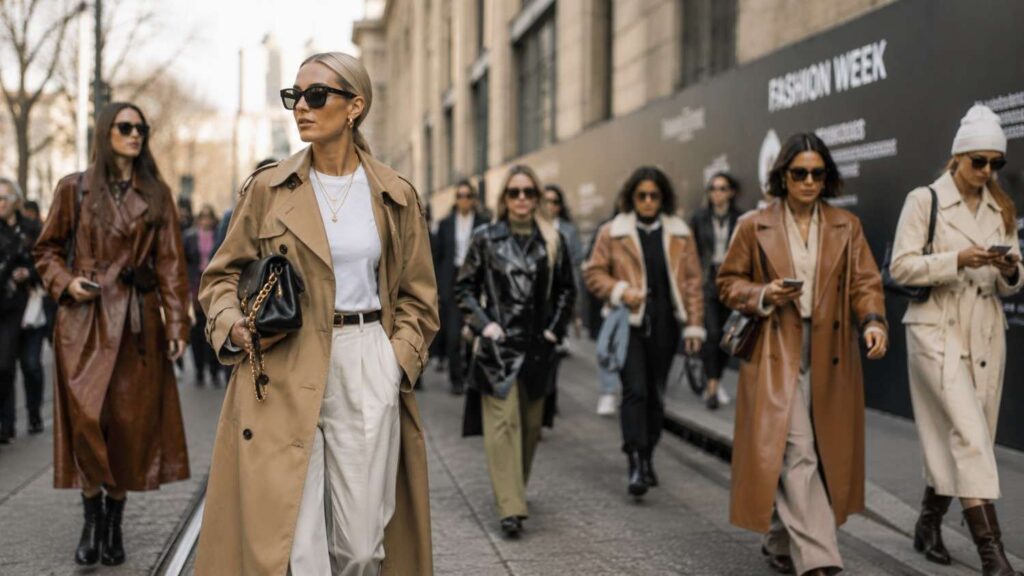
The Best Street Style Looks from Fashion Week
Fashion Week may officially take place inside carefully designed venues, private presentations, and invitation-only runway shows, but many of its most useful styling lessons appear outside. Editors, buyers, models, designers, stylists, photographers, celebrities, and content creators move between appointments wearing outfits that must look distinctive while still working in busy city environments. The result is a constantly changing display of personal style that often feels more accessible than the runway itself.
The best street style looks from Fashion Week provide a practical bridge between high-fashion ideas and everyday wardrobes. A runway may introduce dramatic proportions, unusual materials, or head-to-toe styling concepts. Street style shows how those ideas can be softened, layered, repeated, or combined with familiar pieces such as denim, knitwear, trench coats, loafers, and shoulder bags. This makes street style particularly valuable for readers who enjoy fashion but do not want to copy complete runway looks.
Recent Fashion Week coverage has emphasized wearable polish, tonal minimalism, striking outerwear, scarves, bold color, tactile fabrics, and personality-driven accessories. These ideas are not valuable because they represent a list of rules. They are useful because they demonstrate how intentional styling can make even simple clothing look more expressive.
The goal of this guide is therefore not to encourage imitation. Instead, it explains why certain outfits work, how major fashion capitals influence street style, and how readers can adapt the most effective techniques to their own lifestyle, budget, climate, and level of confidence.
Why Fashion Week Street Style Is Worth Watching
Fashion Week street style deserves attention because it reveals what happens after a trend leaves the runway. A designer collection may present a complete creative vision, but people outside the shows rarely wear every element exactly as it appeared during the presentation. They interpret the idea through their own wardrobe, body shape, schedule, profession, climate, and personal taste. That process creates a more realistic picture of how fashion evolves.
Street style also provides a useful lesson in decision-making. Strong outfits tend to have a clear focal point, controlled proportions, practical footwear, and accessories that reinforce the wearer’s personality. Observing those details can be more valuable than simply identifying which coat, bag, or shoe is currently popular. Advanced fashion followers can study construction, color relationships, visual rhythm, and references to previous decades. Beginners can focus on simpler questions, such as why a long coat balances wide trousers or why a bright accessory improves a neutral outfit.
Another reason to watch Fashion Week street style is its diversity of interpretation. The same trend can look completely different in New York, London, Milan, and Paris. A tailored blazer may appear practical and minimal in New York, playful and layered in London, polished and luxurious in Milan, or relaxed with unexpected casual pieces in Paris. This variety reminds us that trends are starting points rather than instructions.
Most importantly, street style can help readers become more intentional. Instead of buying every new trend, they can identify recurring ideas that suit their existing wardrobe and leave the rest behind.
What Counts as Fashion Week Street Style?
Fashion Week street style refers to the outfits worn by guests, industry professionals, models, celebrities, and other attendees outside runway shows, presentations, showrooms, appointments, and related events. These looks are frequently photographed near venues, hotels, restaurants, and recognizable city locations. Although some outfits are planned with photography in mind, they are still worn in an active environment rather than presented only on a controlled runway.
That difference is important because street style has practical demands. An outfit may need to work during long periods of walking, waiting, commuting, sitting, standing, and moving between indoor and outdoor spaces. The wearer may also need to manage rain, cold temperatures, heat, crowded transportation, and several dress codes in one day. As a result, even highly expressive outfits often include functional foundations.
Street style should not be understood as a completely spontaneous record of ordinary clothing. Brand relationships, borrowed pieces, event dressing, professional styling, and media visibility can influence what people wear. However, the styling combinations remain useful because they demonstrate how dramatic fashion can be incorporated into a complete, moving outfit.
How Street Style Turns Trends into Wearable Ideas
Street style transforms a trend by reducing, repeating, or redirecting its most important visual idea. A runway collection may feature extreme shoulders, exaggerated volume, or a single color across every garment and accessory. On the street, that concept may become an oversized blazer with straight trousers, a sculptural coat over a simple knit, or one saturated red item within an otherwise neutral outfit.
This process makes trends easier to understand. Instead of asking whether a complete runway look belongs in an everyday wardrobe, readers can identify the element that creates the strongest effect. The answer may be the silhouette, fabric, color combination, layering technique, or contrast between formal and casual clothing. Once that principle becomes clear, it can be recreated with different brands and price points.
Recent street style has shown this type of translation through capes, red accents, double denim, relaxed sweatshirts, graphic tops, and unusual proportions. These pieces become wearable when they are combined with familiar clothing. A dramatic skirt may be paired with a plain shirt, while a formal coat may be relaxed with denim and flat shoes. The result feels directional without becoming costume-like.
The Standout Street Style Trends to Know
Current street style trends do not point toward one dominant uniform. Instead, they reflect several ideas that can exist together: clean minimalism, bold color, expressive prints, tactile outerwear, relaxed tailoring, and personal accessories. This variety is useful because it allows readers to participate without abandoning their natural preferences. Someone who favors simplicity can explore tonal dressing, while a more expressive dresser may prefer print mixing or brightly colored outerwear.
The most important development is not a particular garment. It is the return of intentional styling. Strong Fashion Week outfits increasingly look assembled around a clear point of view rather than a collection of recognizable trend pieces. A person may repeat one color through several accessories, combine an oversized coat with narrow trousers, or use a vintage brooch to make a modern blazer feel distinctive. These choices create visual coherence.
Another significant theme is contrast. Formal tailoring appears with casual denim. Elegant skirts are worn with rugby shirts or graphic tees. Polished coats are paired with sneakers, loafers, or practical boots. Delicate fabrics may appear beside leather, wool, or textured knitwear. This contrast prevents the outfit from feeling too predictable.
Readers should approach these trends selectively. Rather than purchasing an entirely new wardrobe, identify the idea that offers the greatest value. A tonal color palette may improve existing office clothes, while one statement coat could refresh several winter outfits. The following trends are especially adaptable because they can be adjusted for different budgets, climates, and lifestyles.
Tonal Minimalism and Elevated Basics
Tonal minimalism uses several shades from the same color family to create an outfit that feels calm, polished, and visually connected. Common palettes include black, charcoal, gray, cream, camel, chocolate brown, navy, olive, and muted burgundy. The outfit may look simple from a distance, but successful tonal dressing depends on careful attention to fabric, fit, and proportion.
Texture prevents a tonal outfit from appearing flat. A charcoal wool coat can be layered over a fine gray knit and paired with darker tailored trousers. A cream outfit might combine denim, cashmere, leather, and structured cotton. Because the colors are closely related, the differences in surface and weight become more noticeable. This creates depth without requiring a bright accent.
Fit is equally important. Minimal outfits provide fewer distractions, so poorly fitting shoulders, awkward trouser lengths, or bulky layers become more visible. Readers should check how each garment interacts with the next. A long coat may need a cleaner trouser line, while a boxy blazer may benefit from a more fitted base layer.
Tonal dressing is especially useful for professional wardrobes because the pieces can be repeated in many combinations. A scarf, belt, bag, or pair of shoes can introduce subtle contrast without disrupting the overall effect.
Statement Outerwear, Texture, and Animal Print
Statement outerwear is one of the most efficient ways to create a memorable street style look. A distinctive coat or jacket occupies a large part of the visual frame, which means the clothing underneath can remain relatively simple. Leopard print, shaggy textures, faux fur, shearling, leather, oversized trenches, sculptural wool coats, and brightly colored jackets have all played an important role in recent Fashion Week coverage.
The easiest way to style statement outerwear is to let it remain the primary focus. A leopard-print coat can be worn with blue jeans, a black knit, and uncomplicated boots. A textured cream jacket may work best with tonal trousers and a simple bag. When the outer layer already includes movement, print, or a strong surface, adding several competing elements can weaken the outfit.
Animal print is particularly versatile because neutral shades of brown, tan, black, and cream can coordinate with many wardrobe basics. However, the scale and placement of the print matter. A full-length coat creates a stronger statement than a small bag or shoe, so the rest of the outfit should respond accordingly.
Practical considerations remain important. Heavy or textured outerwear should allow comfortable movement, accommodate useful layers, and suit the weather. Visual impact is most successful when the wearer appears comfortable rather than restricted by the garment.
Bold Color and Controlled Pattern Clashing
Bold color can transform a familiar outfit without changing its basic structure. Recent Fashion Week street style has featured saturated red, cobalt blue, purple, pink, green, and combinations of several strong tones. These colors may appear in coats, skirts, shirts, trousers, bags, tights, shoes, or smaller details such as scarves and socks.
Beginners can introduce color by choosing one focal item and surrounding it with neutrals. A cobalt sweater can sit above black trousers, while a red bag can sharpen a camel coat and denim. More experienced dressers may use color blocking by combining two or three saturated shades. The key is to maintain a clear relationship between the colors rather than selecting them randomly.
Pattern clashing follows a similar principle. Successful combinations normally share at least one connecting element. Two prints might repeat the same color, use different scales, or balance one structured geometric pattern with a softer floral design. A narrow stripe can support a larger check, while a printed skirt may coordinate with a patterned scarf that repeats one of its secondary shades.
Silhouette should remain controlled when several visual elements are present. Clean shoes, simple jewelry, and a structured bag can provide rest for the eye. Pattern mixing works best when it appears deliberate rather than accidental.
For readers who want to follow how these combinations evolve each season, street style trend reports from Vogue provide ongoing visual references that complement these styling principles.
How Each Fashion Capital Shapes Street Style
The major Fashion Week cities share an international audience, but each location continues to influence street style through its climate, architecture, pace, design history, and local dressing habits. These distinctions should not be treated as rigid stereotypes. People travel between cities, wear global brands, and develop highly individual wardrobes. Even so, each fashion capital creates a different environment for styling.
New York often rewards clothes that move easily through a demanding urban schedule. London encourages eccentricity, subcultural references, heritage tailoring, and unexpected combinations. Milan places strong emphasis on finish, accessories, fabric quality, and confident presentation. Paris frequently combines elegance with apparent ease, allowing polished pieces to sit beside casual or unconventional elements.
Understanding these differences gives readers several ways to interpret the same garment. A trench coat could become part of a practical New York uniform, a layered London preppy look, a polished Milanese outfit, or a relaxed Parisian combination. The item does not change, but the styling language around it does.
This city-based perspective is useful for both beginners and advanced readers. Beginners can use each city as a simple reference point when choosing an outfit direction. Advanced readers can study how cultural references, tailoring traditions, local weather, and street environments influence proportion and layering.
Rather than deciding which city has the “best” style, readers should identify which visual approach supports their lifestyle. A useful wardrobe may draw from all four: New York practicality, London individuality, Milanese polish, and Parisian contrast.
New York Practicality and London Prep
New York Fashion Week street style often reflects the realities of moving through a large, fast-paced city. Guests may travel between boroughs, attend several events, work between shows, and manage unpredictable weather. This encourages outfits built around practical foundations such as denim, trench coats, tailored trousers, crisp shirts, knitwear, flat shoes, and bags that can carry more than a phone.
The visual interest usually comes from one confident adjustment. A classic trench may be oversized, a pencil skirt may appear with a casual top, or simple jeans may be paired with a sequined bag and sharp sunglasses. The result feels purposeful without becoming overly formal.
London Fashion Week outfits often begin with similarly familiar pieces but introduce greater eccentricity. Heritage blazers, button-down shirts, ties, tartan, loafers, trench coats, baseball caps, red socks, and layered knitwear can appear in playful or deliberately mismatched combinations.
The most useful lesson from both cities is that practicality does not need to look ordinary. New York demonstrates how strong editing can elevate functional clothing. London shows how personal references and unexpected accessories can prevent classic pieces from feeling conservative. Together, they offer an effective formula: begin with clothes that work, then add one decision that makes the outfit unmistakably yours.
Milanese Polish and Parisian Ease
Milan Fashion Week style is often associated with a carefully finished appearance. Tailored jackets, structured coats, elegant skirts, leather accessories, silk scarves, jewelry, polished shoes, and oversized sunglasses contribute to an outfit that feels considered from every angle. Even when the clothing is colorful or highly expressive, the overall impression is controlled.
The Milanese sciura provides a useful reference. This style archetype is associated with confident tailoring, luxurious-looking fabrics, costume jewelry, scarves, bold outerwear, and structured handbags. The lesson is not to imitate a particular social character. It is to recognize the power of finishing details. Pressed clothing, deliberate accessories, and strong grooming can make familiar garments appear more refined.
Paris Fashion Week street style often uses a different type of sophistication. Elegant pieces may be combined with rugby shirts, graphic tees, denim, leather bombers, or relaxed shoes. This contrast creates the impression that the outfit developed naturally rather than being assembled around a strict dress code.
Readers can borrow from both approaches. Milan encourages attention to quality, fit, and accessories. Paris demonstrates how to loosen polished clothing with casual elements. A structured jacket can feel less formal with straight jeans, while a graphic top can appear more intentional beneath a tailored coat.
| Style Element | New York | London | Milan | Paris |
|---|---|---|---|---|
| Tailoring | Structured and practical | Relaxed with prep influence | Refined luxury tailoring | Elegant minimal tailoring |
| Color Palette | Neutral with bold accents | Classic tones with bright pops | Rich earthy shades | Black, white, navy, soft neutrals |
| Outerwear | Trench coats, wool coats | Heritage coats, blazers | Long tailored coats | Leather jackets, chic trench coats |
| Accessories | Oversized sunglasses, tote bags | Caps, scarves, chunky jewelry | Silk scarves, structured handbags | Statement bags, delicate jewelry |
| Overall Style Personality | Urban practicality | Creative experimentation | Sophisticated luxury | Effortless elegance |
How to Recreate Fashion Week Looks Step by Step
Recreating Fashion Week style does not require access to designer showrooms, borrowed collections, or a completely new wardrobe. The most effective method is to study the structure of an outfit rather than searching for identical products. Look at the balance of volume, the number of colors, the relationship between formal and casual pieces, and the role of accessories. These decisions usually create more impact than the label inside the garment.
Begin by saving a small number of reference images that genuinely suit your lifestyle. Avoid collecting dozens of unrelated outfits. Instead, look for repeated ideas. You may notice that you are drawn to long coats, monochromatic colors, wide trousers, colorful bags, scarves, or simple outfits with unusual shoes. Those patterns reveal which street style trends are most likely to work for you.
Next, translate each image into categories. Identify the hero piece, base layer, bottom, outerwear, footwear, bag, and finishing detail. You can then search your own wardrobe for equivalent functions. A navy vintage blazer may replace a designer jacket, while a secondhand silk scarf can create the same visual role as a luxury accessory.
Finally, test the outfit in realistic conditions. Walk in the shoes, sit in the trousers, carry the bag, and check whether the layers feel comfortable. Fashion Week looks to recreate should improve your confidence and wardrobe flexibility. They should not leave you feeling disguised, physically restricted, or dependent on constant adjustment.
Step 1—Choose One Hero Piece
A hero piece is the main visual focus of an outfit. It may be a printed coat, bright shirt, sculptural skirt, oversized blazer, embellished bag, unusual pair of shoes, or distinctive vintage item. Choosing this piece first gives the styling process a clear direction and reduces the temptation to add several competing trends.
Consider what makes the item important. A red coat creates impact through color. A shaggy jacket relies on texture. A dramatic skirt may attract attention through movement and shape. Once you identify that quality, the supporting pieces should allow it to remain visible. A bold coat usually needs a quieter base, while an unusual bag may work best with clean tailoring.
The hero piece should also fit the occasion. A sequined skirt may suit an evening event but feel impractical for a full day of commuting. A sculptural blazer may need a thin layer underneath if the sleeves are narrow. Evaluating function at the beginning prevents styling problems later.
One thing I always check first is whether the hero piece feels connected to the wearer’s existing style. A memorable item is valuable when it can be combined with several familiar pieces, not only when it produces one successful photograph.
Step 2—Balance the Proportions
Proportion describes the relationship between the lengths, widths, volumes, and visual weights of different garments. Fashion Week street style frequently uses exaggerated proportions, but the strongest outfits still feel balanced. An oversized blazer may be paired with a narrow base layer, while wide-leg trousers may be balanced by a shorter jacket or a clearly defined waist.
Start by looking at the outfit as a complete silhouette. Check where the coat, blazer, top, skirt, and trousers end. Several garments finishing at an awkwardly similar point can make the body appear visually divided. Adjusting a tuck, cuff, sleeve, or hem may create a cleaner line without changing any item.
Footwear also affects proportion. Long trousers may need a shoe with enough structure to support the fabric. A heavy coat can look more balanced with substantial boots or loafers than with a delicate shoe, although intentional contrast can also work.
Advanced readers can consider visual weight rather than only garment size. Dark colors, thick fabrics, large prints, and textured surfaces appear heavier. Lighter colors and finer materials appear softer. Distributing those qualities thoughtfully helps an outfit feel stable rather than top-heavy or visually crowded.
Step 3—Finish with Functional Accessories
Accessories complete the outfit, but they should also support the day ahead. A visually perfect shoe that causes pain after ten minutes is not a successful styling choice. Loafers, streamlined sneakers, low boots, ballet flats, and stable heels can all look polished when they relate to the shape and formality of the clothing.
The bag deserves similar attention. Consider whether it can hold the essentials, remain secure in crowded spaces, and sit comfortably over the chosen outerwear. A small decorative bag may work for a short event, while a structured shoulder bag or compact tote may be more suitable for a full schedule.
After practical needs are covered, add one personal detail. A silk scarf, vintage brooch, bold earring, colorful sock, textured belt, or distinctive pair of sunglasses can turn a competent outfit into a recognizable one. The accessory should contribute to the overall idea rather than exist only because it is fashionable.
I recommend testing the full outfit before the event. Put on the coat, carry the bag, walk in the shoes, and check how the accessories behave. Functional details create the ease that makes street style appear confident.
Related Articles
Fashion Week Outfit Formulas That Work
An outfit formula is a repeatable combination of garment categories rather than a fixed set of products. This approach is useful because it allows readers to recreate the mood of Fashion Week street style with clothing they already own. The same formula can be adapted for different body shapes, budgets, climates, workplaces, and personal preferences.
For example, “statement coat, simple knit, straight denim, and practical boots” is a formula. The coat could be leopard print, bright red, textured cream, or sharply tailored black. The jeans could be dark, faded, wide, or straight. The formula remains recognizable even when every individual item changes.
Reliable formulas also reduce decision fatigue. Instead of creating an outfit from the beginning each morning, readers can return to a small number of combinations that already feel balanced. Accessories, colors, fabrics, and seasonal layers can then provide variety. This is particularly valuable for people who enjoy fashion but do not want to spend excessive time planning every look.
The most effective formulas contain contrast. A formal jacket may sit beside relaxed denim. A soft skirt may be paired with a structured coat. A monochromatic outfit may be interrupted by one colorful bag. These contrasts create interest while preserving clarity.
The table below summarizes adaptable Fashion Week outfit ideas. Use it as a framework rather than a strict shopping list. Begin with the closest items in your wardrobe, evaluate the silhouette, and make only the purchases that fill a genuine gap.
Wearable Outfit Formula Comparison
| Outfit Formula | Hero Element | Supporting Pieces | Best For |
|---|---|---|---|
| Tonal city look | Long tailored coat | Fine knit, trousers, loafers | Work, travel, and smart-casual events |
| Modern prep | Trench or blazer | Shirt, jeans, tie, cap, or loafers | Transitional weather and daytime plans |
| Statement outerwear | Leopard, leather, or textured coat | Black knit, denim, boots | Cold-weather dressing and evening events |
| Parisian casual | Rugby shirt or graphic tee | Straight jeans, leather jacket | Relaxed weekends and creative workplaces |
| Bold color look | Red, cobalt, purple, or pink piece | Neutral separates and simple shoes | Events, dinners, and social occasions |
| Controlled print mix | Printed skirt, coat, or trousers | Coordinating knit and structured bag | Creative offices and fashion events |
| Milanese polish | Tailored jacket or structured coat | Midi skirt, scarf, jewelry, sunglasses | Lunches and formal daytime occasions |
Each formula contains enough structure to be dependable but enough flexibility to remain personal. A tonal city look can use charcoal for winter, cream for spring, or chocolate brown for autumn. Modern prep can feel traditional with loafers and a trench or more contemporary with oversized proportions and sporty accessories.
The best formula is not necessarily the most dramatic one. It is the combination that can be repeated without feeling forced. Readers should test each option against their actual routine. Someone who walks frequently may rely on flat shoes, while a person working in a conservative office may introduce trends through accessories instead of exaggerated silhouettes.
How to Adapt the Looks to Your Budget
Affordable Fashion Week-inspired outfits begin with observation rather than shopping. Before purchasing anything, identify the exact feature that makes a reference outfit appealing. It may be the long line of the coat, the contrast between a formal jacket and casual jeans, or the repeated use of one color. That feature can often be recreated with items already in the wardrobe.
Secondhand and vintage shopping are particularly useful for outerwear, silk scarves, leather bags, brooches, blazers, and distinctive jewelry. Older pieces may offer better construction or more unusual details than trend-focused alternatives. Clothing rental can also make sense for one-time events, especially when the desired item is highly decorative and unlikely to receive regular wear.
When spending more, prioritize categories that influence comfort, fit, and frequency of use. A well-cut coat, dependable trouser, supportive shoe, or practical bag can improve many outfits. Trend-led accessories, colorful tops, and experimental prints can usually occupy a smaller portion of the budget.
Avoid buying an inexpensive substitute that does not fit simply because it resembles a photographed item. Poor fit will weaken the result regardless of price. Alterations, thoughtful styling, and careful maintenance often provide more value than purchasing several temporary trend pieces.
Common Street Style Mistakes to Avoid
Fashion Week street style encourages experimentation, but successful experimentation still requires editing. Many styling mistakes occur when someone copies visible trends without considering the relationship between the pieces, the demands of the occasion, or their own comfort. The result may look impressive in theory but feel confusing, impractical, or disconnected from the wearer.
One common problem is treating every item as a focal point. A dramatic coat, colorful tights, oversized bag, patterned skirt, metallic shoe, and sculptural sunglasses may each be interesting, but the outfit needs a hierarchy. Without one, the viewer does not know where to look. Strong street style usually contains complexity within a clear structure.
Another mistake is ignoring the environment. Fashion Week photographs may be taken during brief moments outside a venue, but the person wearing the outfit still needs to move through a real day. Weather, transportation, walking distance, indoor heating, security requirements, and seating can all affect whether an outfit functions.
A third issue is copying an aesthetic that does not feel connected to the wearer. Clothing can be experimental without becoming a costume. The most convincing outfits often include repeated personal elements, such as a familiar silhouette, preferred color, vintage accessory, or reliable shoe.
Avoiding these mistakes does not mean dressing conservatively. It means making each decision more deliberate. Readers can still wear strong color, exaggerated proportion, unusual textures, and mixed patterns, provided those elements support a recognizable idea and remain manageable in practice.
Wearing Too Many Trends at Once
Combining multiple trends can produce an expressive outfit, but each addition increases the need for visual control. A leopard coat, bright tights, oversized handbag, printed skirt, metallic shoes, and dramatic sunglasses may all reflect current street style. Worn together without a connecting idea, however, they can compete rather than cooperate.
Begin by deciding what the outfit is primarily about. It might focus on color, texture, silhouette, print, or accessories. Once that theme is clear, supporting pieces should strengthen it. A textured coat may work with a monochromatic base. A mixed-print outfit may need simple shoes and minimal jewelry. A dramatic silhouette may benefit from a restrained color palette.
The editing process is often more important than the initial styling. After getting dressed, view the outfit in a full-length mirror or photograph it from a distance. Remove one item and compare the result. The outfit may become more powerful when the main idea has additional visual space.
Advanced dressers can successfully combine several trends by repeating colors, controlling proportions, and varying scale. Beginners should start with one strong element and add complexity gradually. Confidence develops through understanding why a combination works, not through wearing the greatest possible number of fashionable pieces.
Dressing Only for the Photograph
An outfit designed only for a photograph may fail during the rest of the day. Shoes may become painful, a bag may be too small, a coat may not close, or a delicate fabric may respond poorly to rain and crowded transportation. These practical problems quickly affect posture, movement, and confidence.
Before choosing an outfit, consider the complete schedule. Estimate how far you will walk, whether you will be standing, how temperatures will change, and what you need to carry. Check whether the venue has a cloakroom, whether outdoor waiting is likely, and whether the clothing allows comfortable sitting and movement.
Comfort does not require sacrificing style. A low boot can provide the visual weight of a heel, while a structured flat can look more polished than an uncomfortable pump. Thin thermal layers can protect the silhouette in cold weather. A practical shoulder bag can remain elegant if its shape and material suit the outfit.
The most persuasive street style appears effortless because the wearer can move naturally. Constantly adjusting a neckline, carrying a coat that cannot be worn, or walking carefully in unstable shoes interrupts that impression. Function is not separate from style; it is one of the conditions that allows style to look convincing.
| Occasion | Recommended Street Style Look | Key Clothing Pieces | Footwear | Style Focus |
|---|---|---|---|---|
| Fashion Week Shows | Tailored monochrome outfit | Blazer, trousers, statement coat | Loafers | Polished elegance |
| Casual City Walk | Relaxed denim styling | Straight-leg jeans, knitwear, trench coat | Sneakers | Comfortable everyday fashion |
| Business Meeting | Minimal tailored look | Structured blazer, midi skirt, shirt | Block heels | Professional sophistication |
| Weekend Brunch | Paris-inspired casual outfit | Leather jacket, graphic tee, jeans | Ballet flats | Effortless chic |
| Evening Event | Bold color styling | Statement dress, tailored coat | Ankle boots | Modern glamour |
| Travel During Fashion Month | Layered practical outfit | Oversized coat, knitwear, wide-leg pants | Comfortable loafers | Functional layering |
How to Build a Repeatable Street Style Wardrobe
A repeatable street style wardrobe is built around flexible foundations rather than a constant supply of new statement pieces. The goal is to own garments that can support several outfit formulas, work across multiple settings, and provide a stable background for more expressive accessories. This approach makes fashion more practical while still allowing experimentation.
Begin by reviewing the clothing you wear most often. Identify the jackets, trousers, jeans, skirts, knits, and shoes that consistently feel comfortable and flattering. These pieces reveal your preferred silhouettes and should influence future purchases. A wardrobe becomes more coherent when new items connect with those proven shapes.
Color planning also improves repeatability. A foundation of two or three neutrals makes layering easier, while a smaller number of accent colors creates personality. The palette does not need to be restrictive. It simply helps coats, trousers, tops, shoes, and bags work together in more combinations.
Quality should be evaluated through construction, fabric behavior, comfort, and maintenance requirements rather than brand recognition alone. A useful item should hold its shape, layer effectively, and remain appropriate for the intended climate and lifestyle.
Finally, leave room for evolution. A repeatable wardrobe is not a fixed capsule that never changes. It is a strong framework that makes new trends easier to assess. When a bold coat, scarf, bag, or shoe appears, you can judge whether it expands the wardrobe or creates an isolated outfit that will rarely be worn.
Start with Strong Wardrobe Essentials
Useful Fashion Week wardrobe essentials include a tailored coat, trench coat, blazer, crisp shirt, dependable knitwear, straight or wide-leg jeans, comfortable trousers, a versatile skirt, loafers, boots, and a practical bag. These categories create a foundation because they can support both minimal and expressive styling.
Fit should take priority over exact trend specifications. A blazer does not need the season’s most exaggerated shoulder if that proportion overwhelms the wearer. A wide-leg trouser should fall cleanly over the chosen shoes without dragging. A coat should close comfortably over realistic layers rather than only over a thin top.
Fabric and construction influence how polished the essentials appear. Look for materials that recover after wear, seams that lie flat, buttons that feel secure, and linings that allow easy layering. Consider care requirements before purchasing. A beautiful item that is difficult to clean or unsuitable for the climate may not become a genuine essential.
Neutral foundations provide flexibility, but they do not need to be limited to black and beige. Navy, olive, chocolate, burgundy, cream, and charcoal can function as versatile base colors. Once these essentials are reliable, statement pieces become easier to style because they have a strong structure around them.
If you’re refining your everyday wardrobe, capsule wardrobe inspiration from Who What Wear can help you identify versatile staples that work across multiple outfits and seasons.
Develop a Recognizable Personal Signature
A personal signature is a repeated styling choice that makes different outfits feel connected. It might involve silk scarves, bold earrings, vintage bags, monochromatic palettes, bright socks, strong shoulders, unusual color combinations, brooches, or a consistent preference for oversized outerwear. The signature does not need to appear in every outfit, but it should feel authentic when it does.
Developing one requires observation. Review photographs of outfits you enjoyed wearing and note which elements repeat. You may discover that you consistently prefer defined waists, long coats, dark colors, structured bags, or one bright accessory. These patterns reveal more about personal style than a temporary list of trends.
A signature also improves shopping decisions. Before buying something, ask whether it supports an existing style language or requires an entirely separate identity. A bold scarf may expand several familiar outfits, while an uncomfortable novelty shoe may create only one.
Repetition should not be confused with a lack of creativity. Fashion professionals often become recognizable because they refine the same ideas over time. The colors, proportions, and accessories may change, but the underlying point of view remains consistent. This continuity makes experimentation feel intentional and helps a wardrobe evolve without losing coherence.
Quick Answer About The Best Street Style Looks from Fashion Week
The best street style looks from Fashion Week balance creativity with clothes that still function in real life. The most influential outfits rarely depend on wearing several dramatic trends at once. Instead, they usually begin with a clear foundation, such as tailored trousers, straight-leg denim, a crisp shirt, a fitted knit, or a long neutral coat. One distinctive element then gives the outfit its identity. That element might be a leopard-print jacket, a silk scarf, a saturated color, an oversized blazer, a sculptural skirt, or an unusual handbag.
The strongest current street style ideas include tonal minimalism, statement outerwear, relaxed tailoring, modern preppy combinations, bold color, mixed prints, double denim, textured layers, and expressive accessories. These looks are effective because they focus on proportion, contrast, and personal styling rather than simply displaying expensive clothing.
To recreate them, choose one hero piece, build a practical outfit around it, and refine the overall silhouette. Make sure the shoes, bag, layers, and fabrics suit your actual schedule. Fashion Week style should inspire confidence, not require constant adjustment. A successful outfit feels visually interesting while remaining comfortable enough to walk, travel, sit, and move naturally throughout the day.
Frequently Asked Questions
Readers searching for the best street style looks from Fashion Week often want more than trend identification. They want to know how these outfits work in practice, which ideas suit ordinary routines, and how much of the Fashion Week aesthetic can be recreated without luxury clothing. The following answers address those concerns directly.
A useful starting point is to remember that street style is not a single dress code. It includes minimal tailoring, playful layering, practical denim, dramatic outerwear, vintage clothing, designer pieces, athletic references, and highly personal accessories. The most successful approach is therefore selective. Readers should choose the ideas that support their existing wardrobe and lifestyle instead of attempting to reproduce every visible trend.
The questions below also distinguish inspiration from imitation. An outfit can inspire a new color combination, silhouette, or styling method even when none of its exact products are available. This is particularly important for readers working with limited budgets or more conservative dress codes. A runway-scale idea can often be reduced to a coat, scarf, bag, shoe, or proportion change.
Finally, practical considerations should remain part of every answer. Fashion Week images highlight visual impact, but everyday outfits must also respond to weather, movement, comfort, and repeated wear. The best Fashion Week outfits are valuable not because they are impossible to ignore, but because they provide adaptable lessons about balance, confidence, and personal expression.
What Is Fashion Week Street Style?
Fashion Week street style is the clothing worn by editors, buyers, models, designers, celebrities, creators, photographers, and guests outside runway shows and related industry events. These outfits are photographed in real urban environments, often while attendees are arriving at venues, moving between appointments, or leaving presentations.
The category differs from runway fashion because the clothing must function during an actual day. Even highly dramatic outfits may need practical shoes, protective outerwear, useful bags, and flexible layers. This combination of creativity and function is one reason street style attracts a broad audience.
However, street style should not be viewed as a completely unplanned record of ordinary clothing. Some pieces may be borrowed, gifted, professionally styled, or selected with media attention in mind. Recognizing that context helps readers approach the images realistically.
The most valuable part of street style is not the specific brand being worn. It is the styling information: how colors are repeated, how proportions are balanced, how formal pieces are relaxed, and how accessories create identity. These lessons can be adapted at many price points.
What Should I Wear to Fashion Week?
Choose an outfit that communicates your personal style while supporting the practical demands of the event. Begin with one strong element, such as a tailored coat, distinctive blazer, coordinated set, sculptural skirt, bold color, or memorable accessory. Build the remaining outfit around that focal point instead of combining several unrelated statements.
Consider the schedule before finalizing the look. Fashion Week can involve walking, waiting outside, crowded transportation, changing temperatures, and limited time between venues. Comfortable shoes, secure layers, and a bag large enough for essential items may be more valuable than a delicate accessory that cannot handle the day.
The outfit should also suit your role and access level. A professional appointment may require greater polish than a public activation or informal presentation. When uncertain, refined separates with one expressive detail provide a dependable option.
Most importantly, avoid wearing a costume version of someone else’s style. A Fashion Week outfit should feel like a more intentional expression of your normal wardrobe. Confidence is easier to maintain when the clothing is familiar enough to move in naturally but distinctive enough to feel appropriate for the occasion.
How Can I Recreate Fashion Week Outfits Affordably?
Start by identifying the outfit’s formula rather than its labels. A photographed look might consist of an oversized coat, fitted knit, straight jeans, practical boots, and a colorful bag. Once those categories are clear, search your existing wardrobe for items that perform the same role. The result does not need to match the original colors or brands exactly.
Secondhand stores, vintage shops, resale platforms, clothing swaps, and rental services can provide access to distinctive outerwear, scarves, bags, jewelry, and tailoring at lower prices. Vintage accessories are especially useful because they can make modern basics feel more individual.
Prioritize fit when selecting affordable alternatives. A lower-priced blazer that fits well will usually look more polished than an expensive one with poor proportions. Alterations can improve hems, waists, sleeves, and shoulder lines, extending the value of an otherwise suitable garment.
Finally, build outfits around one new element rather than purchasing several trend pieces at once. A red scarf, leopard-print bag, or structured jacket can refresh clothing you already own. Affordable style becomes more convincing when each addition increases the number of combinations available in the wardrobe.
Which Fashion Week City Has the Best Street Style?
No single fashion capital has objectively superior street style because each city expresses a different combination of culture, climate, industry history, and local dressing habits. The best choice depends on the reader’s preferred aesthetic and practical needs.
New York is particularly useful for people who value polished clothing that can handle an active urban schedule. London appeals to those who enjoy heritage pieces, subcultural references, playful layering, and unconventional combinations. Milan offers inspiration for readers who prefer precise tailoring, refined accessories, rich materials, and confident color. Paris Fashion Week street style often attracts people who appreciate elegant basics combined with relaxed or unexpected elements.
Readers do not need to select only one city. A wardrobe can combine New York practicality, London eccentricity, Milanese finish, and Parisian ease. For example, someone might wear a practical New York-inspired trench, add a London-style tie or bright sock, choose a polished Milanese handbag, and finish with relaxed Parisian denim.
The most productive question is not which city is best. It is which city’s styling decisions can solve a particular wardrobe need or inspire a more personal outfit.
How Do Street Style Stars Mix Prints?
Successful pattern mixing begins with a clear visual connection. Two prints may share one color, belong to related color families, or use contrasting scales. A narrow stripe can work with a large floral print because the difference in scale helps each pattern remain visible. A plaid coat may coordinate with a patterned scarf when both repeat the same burgundy or green.
The silhouette should remain relatively controlled when the prints are complex. Clean tailoring, simple footwear, and a structured bag can prevent the outfit from feeling chaotic. It is also helpful to allow one print to dominate while the second acts as an accent.
Beginners can start by mixing a traditional pattern with an accessory, such as stripes with a printed scarf or checks with an animal-print shoe. More experienced dressers may combine florals, geometrics, plaid, and animal patterns across larger garments.
Before leaving, view the outfit from a distance or photograph it. Prints can appear more intense in a full silhouette than they do when examined individually. If the combination feels crowded, remove one accessory or introduce a solid-colored layer to create visual space.
Are Fashion Week Street Style Trends Practical for Everyday Wear?
Many Fashion Week street style trends are practical when their main idea is simplified. A dramatic runway-inspired outfit does not need to be copied from head to toe. Statement outerwear can become a distinctive coat worn with denim. Bold color can appear through one knit, bag, or scarf. Pattern mixing can begin with a printed skirt and a subtle striped top.
The key is to adjust the intensity to the setting. A creative workplace may support stronger color and unusual proportions, while a conservative office may require those ideas to appear through accessories, fabric, or smaller details. Climate and transportation should also influence the choice.
Practicality improves when a trend connects with clothing already in the wardrobe. An oversized blazer is useful when it can be worn with trousers, jeans, dresses, and skirts. A highly specific novelty item may provide less value if it works with only one outfit.
Street style should be treated as a source of techniques rather than instructions. When readers focus on balance, contrast, layering, and proportion, the trends become easier to adapt and more likely to remain useful beyond one season.
Conclusion
The best street style looks from Fashion Week are memorable because they combine visual confidence with a clear sense of personal identity. They may feature tonal tailoring, leopard-print outerwear, modern prep, saturated color, mixed patterns, denim, silk scarves, vintage jewelry, or expressive bags. However, the individual garment is only part of the result. Proportion, contrast, repetition, comfort, and thoughtful editing determine whether the outfit feels coherent.
Readers do not need to follow every trend or purchase exact designer products. A more effective approach is to identify the styling principle behind a favorite look. A dramatic coat may demonstrate the value of a strong focal point. A monochromatic outfit may show how texture creates depth. A combination of tailoring and denim may reveal how formal and casual elements can balance each other.
Begin with the wardrobe you already trust. Select one hero piece, organize the supporting garments around it, and check the full silhouette. Choose shoes and a bag that work for the real schedule, then add one personal detail that makes the outfit feel distinctive.
Street style is most useful when it encourages better decisions rather than more consumption. By studying how influential dressers use color, proportion, layering, and accessories, readers can develop outfits that feel current without losing individuality. The final result should not look like an imitation of Fashion Week. It should look like a stronger, more intentional version of the person wearing it.